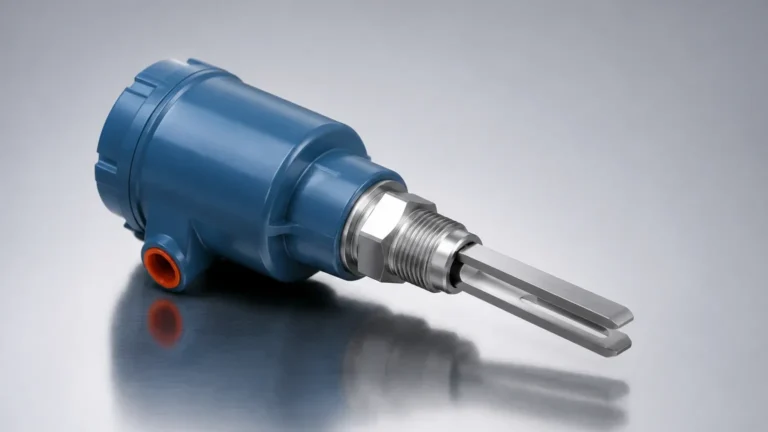
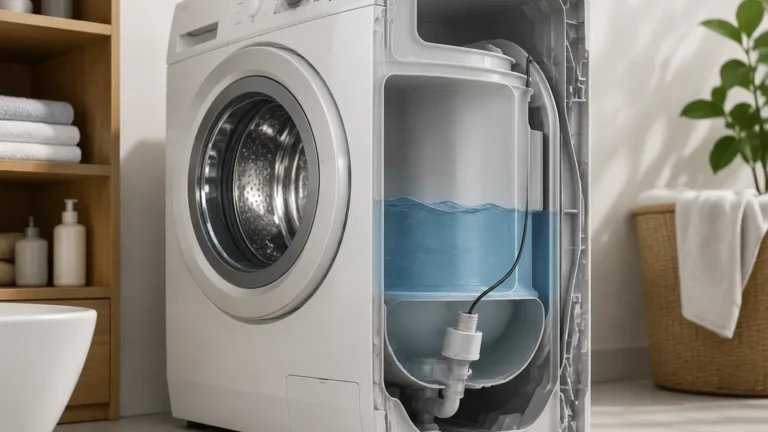
Level Switch Paddle Type
Level Switch Paddle Type
In the landscape of industrial process control, point level detection in bulk solids presents unique challenges compared to liquid level measurement. Among the various technologies available, the level switch paddle type, also known as a rotary paddle level switch, remains a primary choice for engineers due to its mechanical simplicity, robustness, and cost-effectiveness. This article provides a technical overview of the rotary paddle principle, selection criteria, and installation best practices for industrial applications.
Understanding the Rotary Paddle Measurement Principle
The operation of a level switch paddle type is based on the mechanical resistance offered by bulk materials against a rotating element. Unlike electronic sensors that rely on dielectric constants or ultrasonic reflections, the paddle switch uses a low-speed synchronous motor, typically rotating at 1 to 5 revolutions per minute (RPM).
The Detection Cycle
1. Free Rotation: When the material level is below the sensor, the motor drives a shaft connected to a paddle. The paddle rotates freely within the bin or silo.
2. Material Contact: As the bulk solid rises and reaches the paddle, it impedes the rotation. This creates a mechanical resistance (torque) on the shaft.
3. Switch Activation: The motor, which is mounted on a pivoted frame inside the housing, continues to try and rotate. The resulting torque causes the motor to shift against a spring-loaded mechanism. This movement triggers one or two internal microswitches.
4. Signal and Motor Cut-off: The first microswitch typically sends an electrical signal (SPDT or DPDT) to the control system (PLC or alarm). The second microswitch (in high-quality models) cuts power to the motor itself. This prevents the motor from burning out while stalled and extends the service life of the instrument.
5. Reset: Once the material level drops and the paddle is no longer obstructed, the internal spring pulls the motor back to its original position. The microswitches reset, and the motor restarts rotation.
Key Applications in Industrial Bulk Solids
While Level Switches encompass a wide range of technologies, the paddle type is specifically engineered for solid materials. Common applications include:
* Agriculture: Monitoring grain levels in silos, hoppers, and feed mills.
* Construction Materials: Detecting levels of cement, sand, gravel, and fly ash.
* Plastics: Managing plastic pellets, resins, and regrind in injection molding processes.
* Chemicals: Handling powdered chemicals, fertilizers, and detergents.
* Food and Beverage: Level control for flour, sugar, salt, and spices.
* Mining and Minerals: Monitoring coal, ores, and crushed stone.
Selection Criteria for Paddle Level Switches
Choosing the correct level switch paddle type requires a detailed understanding of the material properties and the process environment. A mismatch between the sensor and the application can lead to false readings or premature mechanical failure.
1. Bulk Density
Bulk density is the most critical factor. Materials with very low density (e.g., expanded perlite or light powders) require a highly sensitive switch with a large paddle surface area. Conversely, heavy materials like iron ore require a robust shaft and a smaller paddle to prevent mechanical damage. Most industrial paddle switches feature adjustable spring tension (usually 3 or 4 settings) to accommodate different densities, typically ranging from 10 kg/m³ to 2,000 kg/m³.
2. Paddle Geometry
The shape of the paddle influences how the material interacts with the sensor. Common designs include:
* Standard Cross Paddle: General-purpose design for medium-density materials.
* Scimitar/Sickle Paddle: Designed to be inserted through a small mounting hole (e.g., a 1.5-inch NPT) while providing enough surface area for detection.
* Folding Paddle: Used for installation from the outside through a narrow nozzle; the paddle unfolds once inside the vessel.
* Large Surface Area Paddle: Required for extremely light, aerated powders.
3. Process Temperature and Pressure
Standard models typically handle temperatures up to 80°C (176°F). For high-temperature applications, such as hot fly ash or kiln discharge, specialized models with thermal separators or cooling fins can withstand temperatures exceeding 250°C (482°F). Pressure ratings must also be considered, especially in pressurized pneumatic conveying systems.
4. Shaft Length and Extensions
While side-mounted switches usually have short shafts, top-mounted units often require extensions to reach the desired switching point. These can be rigid pipe extensions or flexible cable extensions. Flexible extensions are preferred in silos where heavy material movement might bend a rigid shaft.
Technical Selection Table
| Material Type | Typical Density (kg/m³) | Recommended Paddle Type | Sensitivity Setting |
| :— | :— | :— | :— |
| Plastic Pellets | 450 – 600 | Standard Cross | Medium |
| Cement | 1,200 – 1,500 | Scimitar / Heavy Duty | High |
| Sawdust | 150 – 250 | Large Surface Area | Low (Sensitive) |
| Grain (Corn/Wheat) | 700 – 800 | Standard Cross | Medium |
| Flour | 500 – 600 | Folding Paddle | Medium |
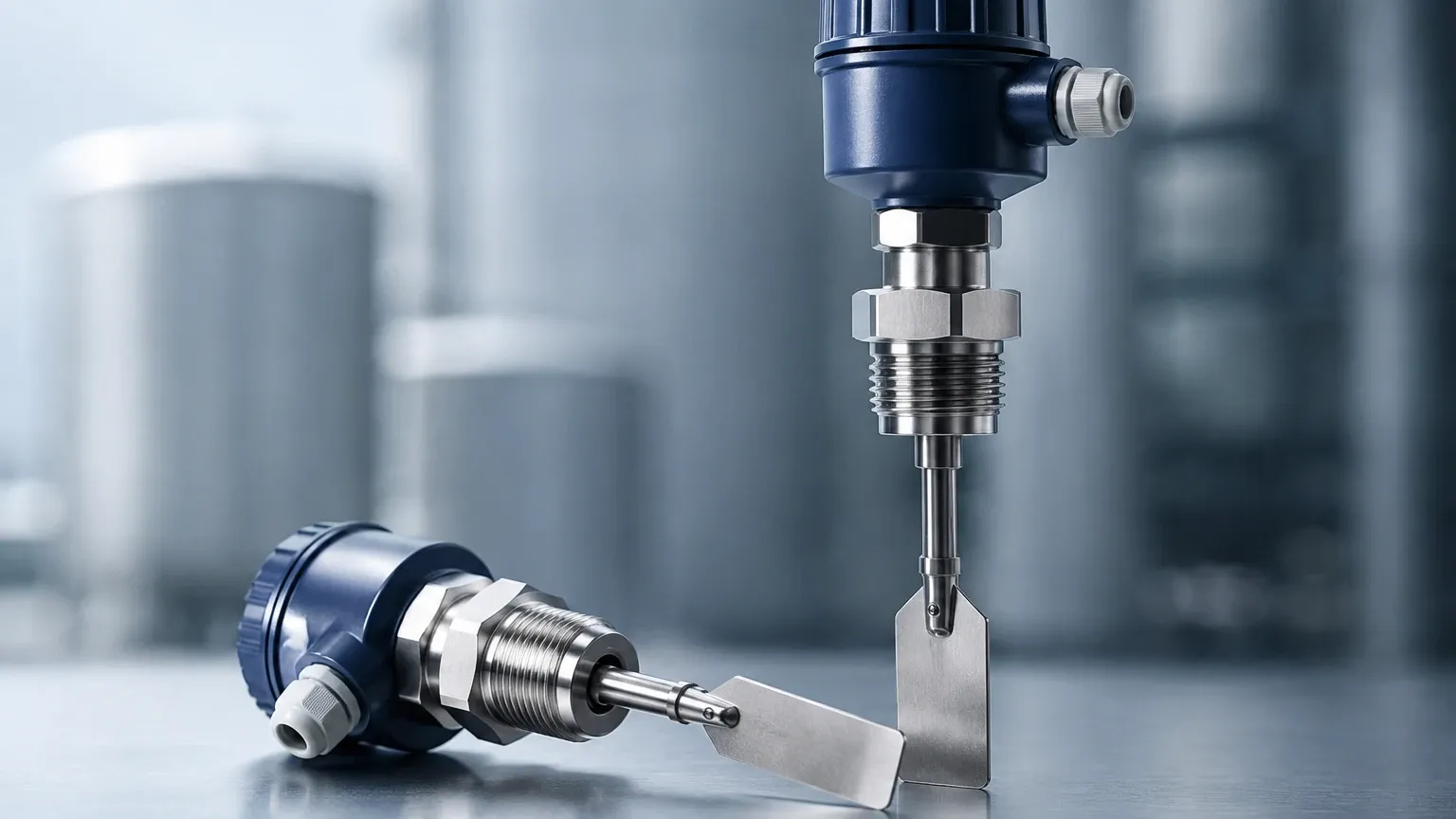
Installation and Engineering Guidelines
Proper installation is essential to ensure the longevity of the level switch paddle type. Engineers should follow these practical guidelines:
Mounting Position
* Side Mounting: The switch is installed through the side wall of the silo. It should be positioned so that the paddle is not directly in the path of the incoming material flow. If this is unavoidable, a protective baffle or "shield" (typically an inverted V-shape) should be installed above the paddle to deflect the weight of the falling material.
* Top Mounting: The switch is installed on the roof of the silo. This is ideal for high-level alarms. Ensure the shaft extension is long enough to reach the trigger point but not so long that it vibrates excessively.
Wiring and Housing
* Cable Entry: Always install the unit so that the cable entries point downwards. This prevents moisture from running down the cable and entering the housing via the conduit.
* Grounding: Ensure the housing is properly grounded, especially in environments with combustible dust where static electricity can build up.
Avoiding Mechanical Stress
In large silos, the downward force of a settling material column (friction) can be immense. For top-mounted units with long shafts, a flexible coupling or a reinforced shaft should be used to prevent the internal mechanism from being pulled out of alignment.
Limitations and Comparison with Other Technologies
While the paddle type is highly versatile, it is not suitable for every application. Understanding its limitations helps in selecting the right Level Switches for a project.
Limitations
* Sticky Materials: Materials that tend to cake or build up (like wet clay or certain resins) can coat the paddle, causing it to stall even when the level is low.
* Liquids: Paddle switches are not designed for liquids; the resistance provided by most liquids is insufficient to stall the motor reliably.
* High-Speed Filling: In very high-speed filling operations, the physical impact of material can damage the paddle or shaft.
Comparison Table: Paddle vs. Alternatives
| Feature | Rotary Paddle | Vibrating Fork | Capacitance |
| :— | :— | :— | :— |
| Material State | Solids only | Solids & Liquids | Solids & Liquids |
| Complexity | Mechanical | Electronic | Electronic |
| Build-up Sensitivity | Moderate | High | Very High |
| Maintenance | Motor/Seal wear | None | Calibration required |
| Cost | Low | Medium | Medium/High |
Maintenance and Troubleshooting
The level switch paddle type is a mechanical device and, as such, requires periodic inspection.
1. Seal Inspection: The shaft seal prevents dust from entering the motor housing. In abrasive applications (like sand), this seal should be checked annually for wear.
2. Motor Function: If the switch fails to signal, check if the motor is still rotating when the paddle is free. Synchronous motors have a finite lifespan, typically 3-5 years in continuous operation.
3. Paddle Integrity: In high-wear environments, the paddle itself may erode over time, reducing its surface area and sensitivity. Replace paddles if significant thinning or deformation is observed.
Frequently Asked Questions (FAQ)
Q: Can a paddle level switch be used for low-level detection?
A: Yes, it can be used for both high and low-level detection. When used for low-level detection, the switch signals when the material falls *below* the paddle, allowing the motor to restart rotation.
Q: What happens if the material is very hot?
A: For temperatures exceeding 80°C (176°F), you must use a high-temperature version. These typically include a thermal barrier (heatsink) between the process flange and the motor housing to protect the electronics and motor.
Q: How do I adjust the sensitivity?
A: Most units have an internal spring that can be hooked into different slots. Moving the spring to a higher tension slot makes the switch less sensitive (for heavy materials), while lower tension makes it more sensitive (for light materials).
Q: Is the level switch paddle type suitable for hazardous areas?
A: Yes, many manufacturers provide ATEX or IECEx certified models specifically designed for use in dust-explosion-proof zones (e.g., Zone 20, 21, or 22). Always verify the certification matches your site's hazardous area classification.
By following these engineering principles and selection criteria, process managers can ensure that their level switch paddle type provides reliable, long-term service in even the most demanding bulk solids environments.