Level Switch Rotary
Level Switch Rotary
In the landscape of industrial automation, managing bulk solids presents unique challenges compared to liquid level measurement. The physical properties of powders, granules, and aggregates—such as bulk density, angle of repose, and abrasiveness—require specialized instrumentation. Among the most reliable and widely utilized technologies for point level detection in these environments is the level switch rotary. This mechanical-electronic hybrid provides a robust solution for preventing silo overfills and ensuring process continuity in industries ranging from agriculture to heavy mining.
Measurement Principles of Rotary Level Switches
The operation of a level switch rotary is based on the principle of mechanical resistance. Unlike ultrasonic or radar sensors that rely on wave reflection, the rotary switch interacts physically with the stored material.
The Drive Mechanism
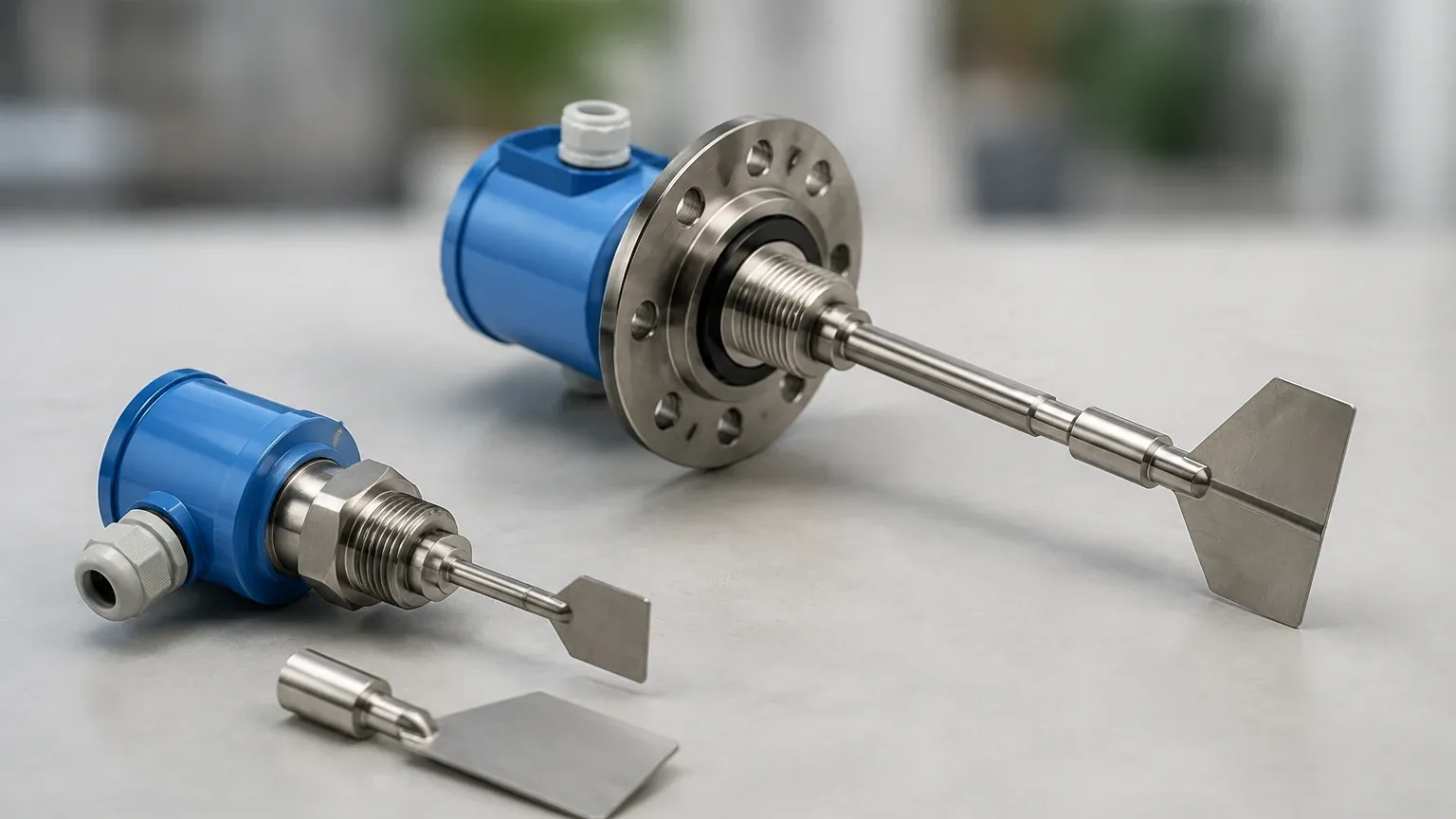
At the core of the device is a low-speed synchronous motor, typically operating at one revolution per minute (1 RPM). This motor drives a rotating shaft connected to a paddle. Under normal conditions, when the material level is below the paddle, the motor rotates the shaft freely.
Detection and Switching
When the material level rises and reaches the paddle, it creates mechanical resistance. This resistance stops the rotation of the paddle, which in turn causes the motor to rotate around its own axis within the housing against a spring-loaded mechanism. This displacement triggers a micro-switch, which changes the state of the output (typically a SPDT relay).
Simultaneously, the power to the motor is cut off to prevent overheating and mechanical wear while the paddle is stalled. Once the material level drops and the paddle is no longer obstructed, the spring tension returns the motor to its original position, the micro-switch resets, and the motor restarts, resuming the rotation of the paddle.
The Slip Clutch
High-quality Level Switches of the rotary variety often incorporate a slip clutch. This component protects the motor and gearbox from sudden impacts or manual interference during installation, ensuring that the internal gears are not stripped if the paddle is forced to stop or turn abruptly.
Key Evaluation Criteria for Selection
Selecting the correct level switch rotary requires an understanding of both the instrument’s specifications and the material’s characteristics. Not all rotary switches are suitable for every bulk solid.
1. Bulk Density
Bulk density is the most critical factor. Lightweight materials like perlite or wood shavings require a high-sensitivity setting and a large paddle surface area to generate enough resistance to stall the motor. Conversely, heavy materials like iron ore or cement require a robust paddle and a higher torque setting to prevent false triggers caused by the weight of the material itself.
2. Paddle Geometry
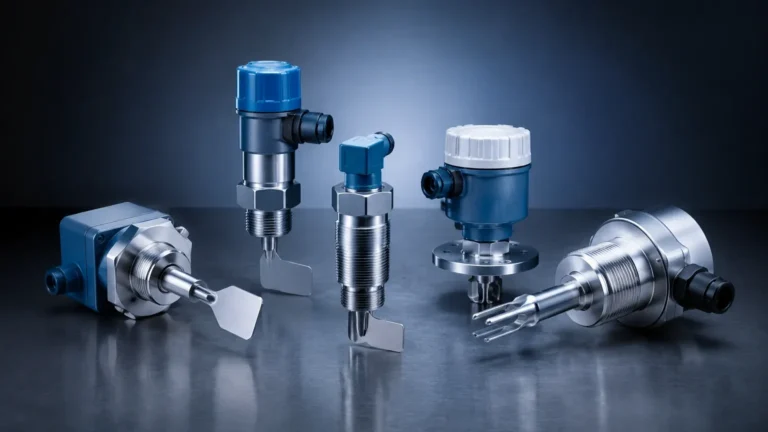
The shape of the paddle (vane) must match the material. Standard rectangular paddles are common for general use, while "scimitar" or "sickle" shaped paddles are designed to be inserted through narrow mounting nozzles without removing the paddle from the shaft.
3. Process Temperature and Pressure
Standard units typically handle temperatures up to 80°C (176°F). For applications involving hot fly ash or kiln-dried aggregates, high-temperature versions with extended shafts and heat-dissipating fins are required to protect the electronics and motor. Pressure ratings must also be checked, especially in pneumatic conveying systems where silos may be pressurized.
4. Torque Adjustment
Most industrial rotary switches allow for adjustable spring tension. This allows the user to fine-tune the sensitivity based on the material density. A "weak" setting is used for light powders, while a "strong" setting is used for dense, heavy granules.
Practical Selection Table
| Material Type | Typical Bulk Density (kg/m³) | Recommended Paddle Type | Sensitivity Setting |
| :— | :— | :— | :— |
| Plastic Pellets | 450 – 600 | Standard 2-Vane | Medium |
| Cement / Flour | 800 – 1200 | Large 3-Vane | High |
| Grain / Corn | 600 – 800 | Standard 3-Vane | Medium |
| Sand / Gravel | 1500 – 1800 | Heavy Duty Scimitar | Low (High Torque) |
| Sawdust / Perlite | 50 – 150 | Extra Large / Foldable | Very High |
Installation Considerations
The longevity and accuracy of a level switch rotary depend heavily on correct placement and mounting. Engineering teams should follow these guidelines to ensure reliable performance:
* Avoid the Infeed Path: The sensor should never be mounted directly in the path of falling material. The force of the material stream can damage the paddle or shaft and cause constant false alarms. If mounting near the inlet is unavoidable, a heavy-duty protective baffle (a "V" shaped metal shield) should be installed above the paddle.
* Mounting Angle: While rotary switches can be mounted vertically (from the top) or horizontally (from the side), side mounting is more common for high and low-level detection. For side mounting, the unit should be installed at a slight downward angle (approx. 15 to 20 degrees) to prevent material build-up on the shaft sleeve, which could lead to mechanical binding.
* Shaft Length: For high-level detection, a short shaft is usually sufficient. For low-level detection or "demand" sensing in large bins, extended shafts (up to 3 meters or 10 feet) may be used. Long vertical shafts should be supported by a bearing at the end or protected by a pipe to prevent bending under the weight of shifting material.
* Cable Entry: Always ensure that cable glands point downwards to prevent moisture from entering the housing via the conduit. This is a common cause of premature electronic failure in outdoor silos.
Limitations and Operational Risks
While the level switch rotary is a "workhorse" of the industry, it is not a universal solution. Engineers must be aware of its limitations:
1. Mechanical Wear: Because it has moving parts, the motor and bearings will eventually wear out. In high-cycle applications, non-mechanical technologies like vibrating forks or RF capacitance might be considered, though they often come at a higher price point.
2. Material Caking: If the material is extremely sticky or prone to moisture-induced clumping (like wet clay or certain chemical powders), it can build up on the paddle and shaft. This can increase the weight of the paddle enough to stall the motor even when the silo is empty.
3. No Continuous Measurement: The rotary switch is a point-level device. It can only tell you if the material has reached a certain height (On/Off). It cannot provide a percentage-full reading. For continuous monitoring, radar or ultrasonic transmitters are required.
4. Liquid Limitations: This technology is strictly for solids. In liquids, the paddle would rotate with very little resistance, and the seals are generally not designed for hydrostatic pressure or chemical immersion.
Maintenance and Troubleshooting
Routine maintenance for a level switch rotary is minimal but essential for critical processes.
* Visual Inspection: Periodically check the paddle for signs of erosion or bending, especially when handling abrasive materials like glass cullet or metal ores.
* Seal Integrity: Inspect the housing gasket and shaft seal. If fine dust enters the motor compartment, it can act as an abrasive and shorten the lifespan of the synchronous motor.
* Functional Test: Most units can be tested by manually stopping the paddle (with power on) to ensure the relay trips and the motor stops.
Common Issue: The motor is running, but the paddle isn't turning.
* *Diagnosis:* This usually indicates a broken shear pin or a failed slip clutch, often caused by a large chunk of material hitting the paddle.
* *Solution:* Replace the internal clutch mechanism or the paddle assembly.
Common Issue: The switch indicates "Full" even when the silo is empty.
* *Diagnosis:* This is often caused by excessive material build-up on the paddle or a return spring that has lost its tension.
* *Solution:* Clean the paddle or increase the spring tension setting.
Frequently Asked Questions (FAQs)
Q: Can a rotary level switch be used in explosive environments?
A: Yes, but you must specify an explosion-proof (ATEX, IECEx, or Class/Div) model. These units feature flame-proof housings and specialized internal components to prevent any spark from igniting dust in the silo.
Q: What is the benefit of a folding paddle?
A: A folding paddle allows the unit to be installed through a standard 1.5" or 2" NPT/BSP threaded mounting boss. Once inside the silo, the paddle unfolds due to centrifugal force or gravity, providing a larger surface area for detection without requiring a large flange.
Q: How long does a typical rotary switch last?
A: In a clean, indoor environment with non-abrasive material, a high-quality motor can last 5 to 10 years. In heavy industrial applications with high vibration and abrasive dust, the lifespan may be 2 to 4 years before a motor or seal replacement is needed.
For engineers designing bulk handling systems, the level switch rotary remains a primary choice due to its simplicity and the fact that its operation is unaffected by the dielectric constant, conductivity, or dust clouds within the silo. By following proper selection and installation protocols, these devices provide a cost-effective and dependable safeguard for industrial storage assets.