Liquid Level Switch
Liquid Level Switch
In the realm of industrial automation and process safety, the liquid level switch is a fundamental component used to detect the presence or absence of a liquid at a specific point. Unlike continuous level transmitters that provide a real-time percentage or volume measurement throughout the entire height of a vessel, a level switch acts as a point-level sensor. It triggers an electrical signal—typically a relay or a transistor output—when the liquid reaches a predetermined threshold. This functionality is critical for preventing tank overflows, protecting pumps from dry-running, and managing automated filling or emptying cycles.
Selecting the appropriate liquid level switch requires a deep understanding of the physical properties of the medium, the environmental conditions of the process, and the mechanical constraints of the installation. This guide provides a comprehensive technical overview of measurement principles, selection criteria, and engineering best practices for integrating level switches into industrial systems.
Core Measurement Principles
To select the right instrument, engineers must first understand the physics behind the various detection methods. Each technology has specific strengths depending on the liquid's conductivity, density, viscosity, and dielectric properties.
1. Float Level Switches
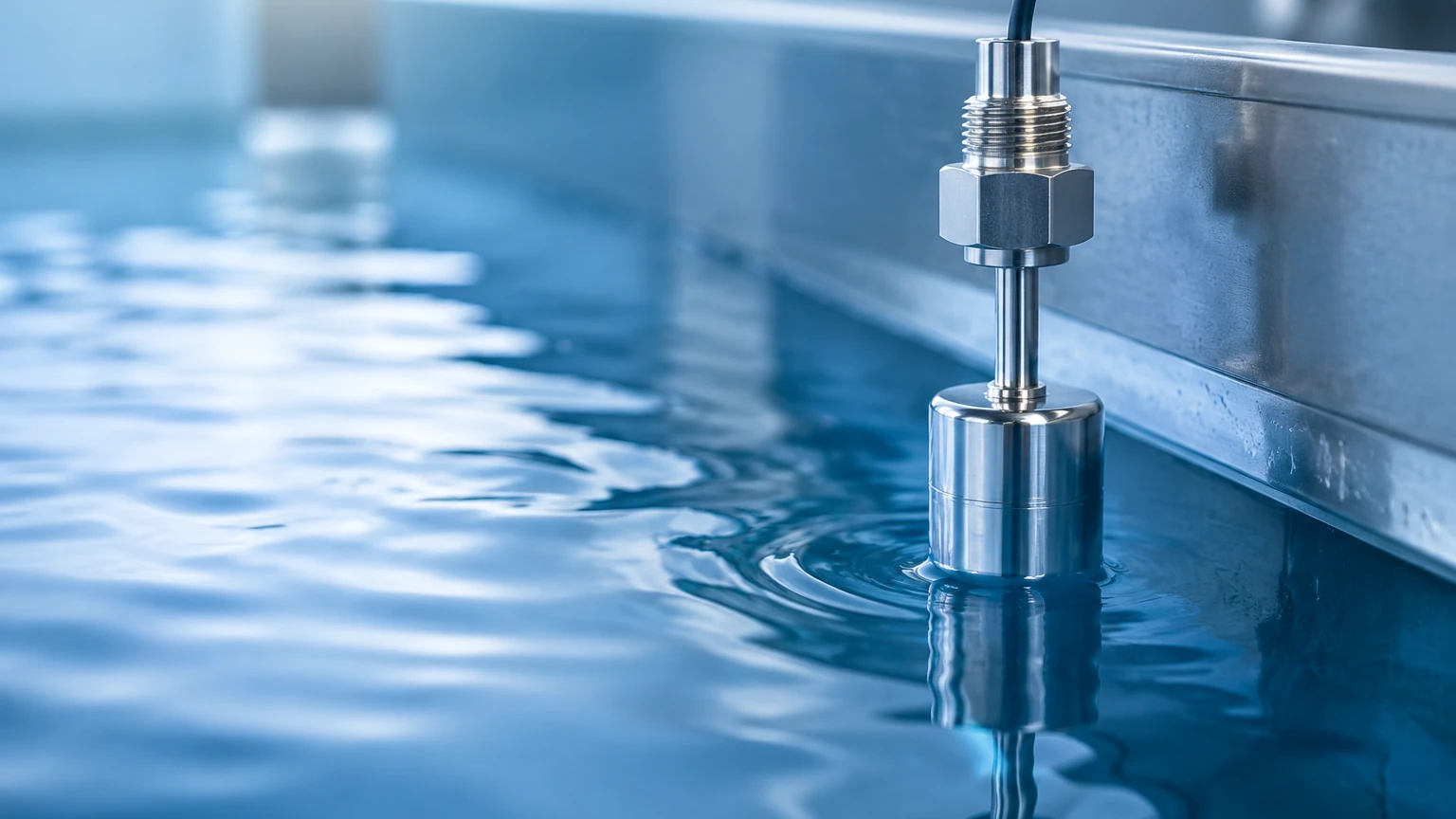
Float switches operate based on the principle of buoyancy (Archimedes' Principle). A float, usually containing a permanent magnet, moves up and down with the liquid level. As the float reaches a specific height, the internal magnet actuates a hermetically sealed reed switch located inside a stationary stem.
* Advantages: Low cost, simple installation, and no power requirement for the sensing element itself.
* Best For: Clean liquids like water, oils, and chemicals in non-turbulent environments.
2. Vibrating Tuning Fork Switches
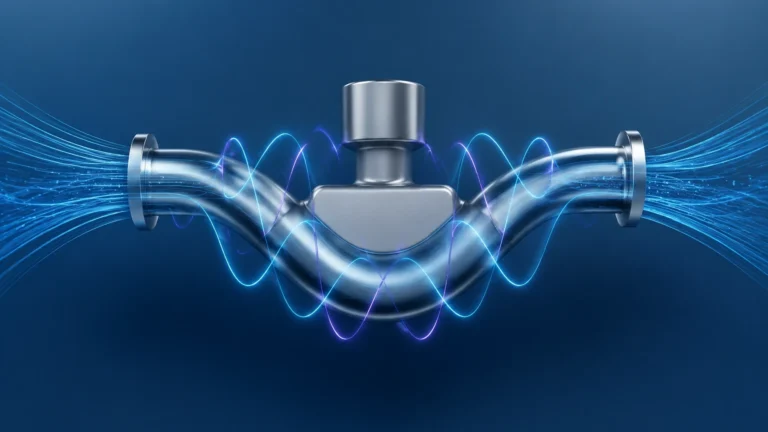
The sensing element of a tuning fork switch consists of two tines that are vibrated at their natural resonant frequency by a piezoelectric crystal. When the tines are immersed in a liquid, the frequency changes or the vibration is dampened. The internal electronics detect this frequency shift and convert it into a switching signal.
* Advantages: Highly reliable, unaffected by bubbles, foam, or suspended solids. They are often considered "universal" switches because they do not require calibration for different liquid densities.
* Best For: High-viscosity liquids, aerated liquids, and applications requiring high reliability like overfill protection.
3. Capacitance Level Switches
A capacitance switch measures the change in electrical capacitance between a probe and the tank wall (or a second reference probe). Since liquids have a higher dielectric constant than air, the capacitance increases significantly when the probe is covered by the medium.
* Advantages: No moving parts, suitable for high temperatures and pressures.
* Best For: Corrosive liquids, slurries, and interface detection (e.g., oil/water interfaces).
4. Ultrasonic Level Switches
These switches utilize high-frequency sound waves. A gap-style ultrasonic switch features a sensor head with a small gap; when liquid fills the gap, the ultrasonic signal is transmitted across it to a receiver. Alternatively, non-contact ultrasonic switches can be set to trigger at a specific distance.
* Advantages: Excellent for hazardous or aggressive media where contact must be minimized.
* Best For: Wastewater, chemical processing, and food and beverage applications.
5. Optical Level Switches
Optical switches use an infrared LED and a phototransistor. When the sensor tip is in air, the infrared light is reflected back into the receiver via a prism. When immersed in liquid, the light is refracted into the medium, causing the receiver to detect a loss of signal.
* Advantages: Extremely compact, fast response time, and no moving parts.
* Best For: Leak detection in double-walled pipes and small tank applications.
Industrial Selection Criteria
Choosing a liquid level switch is not a one-size-fits-all process. Engineers should consult the Main Page of a specialized manufacturer like Welk to review specific technical datasheets, but the following criteria serve as a baseline for evaluation:
1. Media Characteristics: Consider the density (specific gravity), viscosity, and chemical compatibility. For example, a float switch may fail in highly viscous liquids, whereas a tuning fork switch would excel.
2. Process Conditions: Operating temperatures can range from cryogenic levels to over 250°C (482°F). Pressure ratings must also be verified, especially in pressurized boiler or chemical reactor applications where pressures might exceed 40 bar (580 psi).
3. Output Requirements: Determine if the system requires a Dry Contact (Relay), PNP/NPN transistor output, or a two-wire loop-powered signal (8/16mA).
4. Hazardous Area Ratings: If the environment contains explosive gases or dust, the switch must be certified (e.g., ATEX, IECEx, or UL Class I, Div 1).
Technical Selection Table
| Technology | Minimum Density | Max Viscosity | Foam Resistance | Moving Parts |
| :— | :— | :— | :— | :— |
| Float | >0.5 g/cm³ | Low | Moderate | Yes |
| Tuning Fork | >0.5 g/cm³ | Up to 10,000 cP | Excellent | No (Vibrating) |
| Capacitance | N/A | High | Good | No |
| Ultrasonic | N/A | Moderate | Poor | No |
| Optical | N/A | Low | Moderate | No |
Installation and Mounting Considerations
Correct installation is as vital as selecting the right technology. Failure to account for the physical dynamics within a tank can lead to false triggers or premature sensor failure.
* Orientation: Most switches can be mounted horizontally (side-mount) or vertically (top-mount). However, for tuning fork switches, horizontal mounting is often preferred to allow liquid to drain easily from the tines, preventing "bridging" or false-positive signals due to residual liquid.
* Turbulence and Agitation: In tanks with mixers or high-velocity inflow, the mechanical force of the liquid can damage float stems or cause signal "chatter." In these cases, a stilling well (a pipe surrounding the sensor) should be used to provide a calm environment for measurement.
* Dead Zones and Nozzles: Ensure the sensing element extends far enough into the tank to clear the mounting nozzle. If the sensor is recessed within a narrow nozzle, liquid may become trapped (capillary effect), preventing the switch from resetting when the level drops.
* Electrical Wiring: Always use shielded cables in environments with high electromagnetic interference (EMI). For outdoor installations, ensure the cable entry points are sealed with appropriate liquid-tight glands to maintain the IP66/IP67 rating of the enclosure.
Limitations and Potential Risks
While highly effective, liquid level switches have limitations that must be managed:
* Coating and Buildup: In applications involving sticky resins or dehydrating slurries, material can build up on the sensor. Capacitance and tuning fork switches often feature "active shield" or "coating rejection" electronics to mitigate this, but regular cleaning may still be required.
* Scale and Calcification: In hard water applications, mineral deposits can seize the moving parts of a float switch. In such environments, non-contact or vibrating technologies are superior.
* Specific Gravity Fluctuations: Float switches are sensitive to changes in liquid density. If a process switches from a heavy chemical to a light solvent, the float may no longer be buoyant enough to actuate the switch.
Frequently Asked Questions (FAQ)
Q: Can a liquid level switch be used for solids?
A: Some types, like tuning fork and capacitance switches, are designed to work with both liquids and granular solids (powders, grains). However, float and optical switches are strictly for liquid applications.
Q: What is the difference between a "Normally Open" (NO) and "Normally Closed" (NC) configuration?
A: This refers to the state of the electrical switch when the liquid is not present. A Normally Open switch closes the circuit when the liquid reaches it. For safety-critical applications like overfill prevention, a Normally Closed configuration is often preferred because it provides a "fail-safe" signal if the power is lost or a wire is cut.
Q: How do I test a level switch without filling the tank?
A: Many modern electronic switches (tuning fork, ultrasonic) include a manual test button or a magnetic test point on the housing that simulates a "wet" condition for loop testing. For float switches, a manual lift rod can sometimes be integrated into the design.
Q: Are these switches compatible with food and beverage processing?
A: Yes, provided they are manufactured with 316L stainless steel and feature hygienic connections (like Tri-Clamp) and meet FDA or EHEDG standards for surface roughness.
Conclusion
The liquid level switch remains an indispensable tool in the industrial engineer’s toolkit. By understanding the specific physics of detection—whether through buoyancy, vibration, or dielectric change—and accounting for the rigors of the process environment, facilities can ensure long-term operational safety and efficiency. For those requiring precision-engineered instruments tailored to specific industrial parameters, reviewing the comprehensive catalog on the Main Page is the recommended next step for procurement and technical validation.