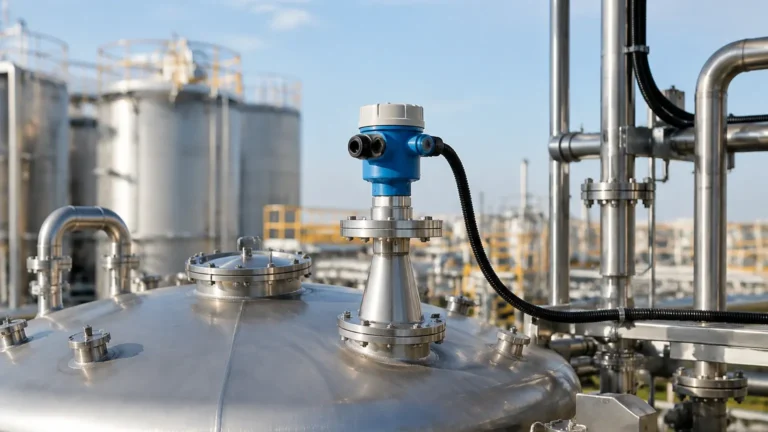
Siemens Radar Level Transmitter
Siemens Radar Level Transmitter: An Engineering Guide to Selection and Application
In the landscape of industrial process automation, non-contact level measurement has become the preferred standard for high-accuracy requirements. Among the leading technologies, the Siemens radar level transmitter series—marketed under the SITRANS brand—represents a significant portion of the global installed base. These instruments utilize microwave technology to measure the distance to a liquid or solid surface, providing reliable data even in environments characterized by extreme temperatures, high pressures, or corrosive vapors.
Selecting the correct radar instrument requires a deep understanding of microwave physics, process vessel geometry, and the dielectric properties of the material being measured. This guide explores the technical foundations of radar technology and provides a framework for evaluating Siemens SITRANS LR series instruments alongside broader industry alternatives.
1. Fundamental Measurement Principles
Before selecting a specific siemens radar level transmitter, engineers must distinguish between the two primary methods of microwave level detection: Pulse Radar and Frequency Modulated Continuous Wave (FMCW).
Pulse Radar (Time of Flight)
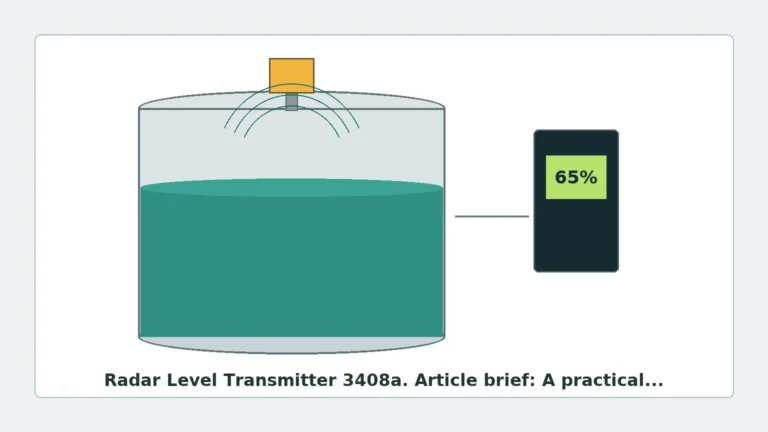
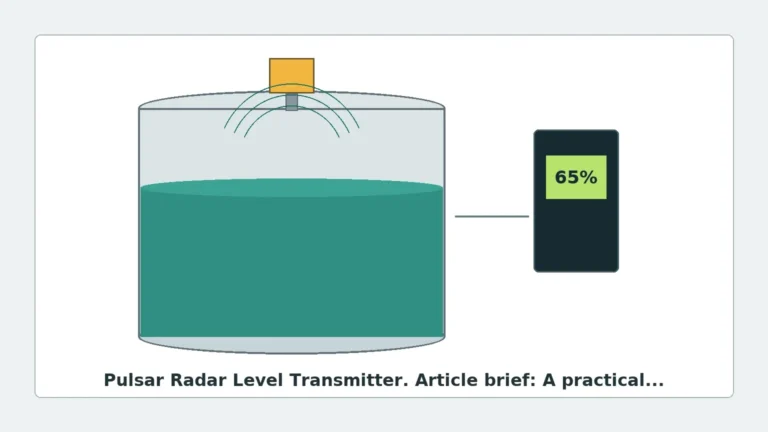
Pulse radar transmitters emit a short microwave signal toward the material surface. The instrument measures the time it takes for the pulse to travel to the surface and return to the sensor. Since the speed of light (and microwaves) is constant in a vacuum and relatively constant in air, the distance is calculated as:
Distance = (Speed of Light × Travel Time) / 2
Pulse radar is known for its energy efficiency, often allowing for two-wire loop-powered configurations. It is highly effective in liquid applications where the surface is relatively calm.
FMCW (Frequency Modulated Continuous Wave)
FMCW technology, utilized in higher-end models like the SITRANS LR560, does not send individual pulses. Instead, it emits a continuous signal with a constantly changing frequency. The transmitter compares the frequency of the reflected signal with the frequency of the signal being emitted at that exact moment. The difference in frequency (the "beat frequency") is directly proportional to the distance.
FMCW typically offers a higher signal-to-noise ratio, making it superior for measuring solids, powders, or liquids with heavy agitation and foam. When evaluating Radar Level Meters, FMCW is often the preferred choice for 80 GHz high-frequency applications.
2. The Impact of Operating Frequency
Frequency is perhaps the most critical specification in radar selection. Siemens offers transmitters across several frequency bands, each suited to specific process conditions.
* 6 GHz (C-Band): Lower frequency radar is less affected by steam, dust, or turbulence. It is the traditional choice for heavy agitation or applications involving boiling surfaces. However, it requires much larger antennas to maintain a focused beam.
* 24 GHz (K-Band): A versatile middle ground. It offers a smaller beam angle than 6 GHz models and is suitable for most liquid tanks. The SITRANS LR250 is a common example of this frequency class.
* 80 GHz (W-Band): The modern standard for precision. 80 GHz transmitters, such as the SITRANS LR110 or LR120, feature extremely narrow beam angles (as small as 3 to 4 degrees). This allows the signal to avoid internal tank obstructions like ladders, agitators, or heating coils.
3. Comparison of Siemens SITRANS Radar Models
The following table outlines the typical performance specifications for the core Siemens radar level transmitter portfolio used in B2B industrial environments.
| Model | Technology | Frequency | Max Range | Primary Application |
| :— | :— | :— | :— | :— |
| SITRANS LR100 | FMCW | 80 GHz | 8 m (26 ft) | Basic liquid level, water/wastewater |
| SITRANS LR120 | FMCW | 80 GHz | 30 m (98 ft) | Chemical storage, solids, outdoor use |
| SITRANS LR250 | Pulse | 24 GHz | 20 m (66 ft) | Corrosive liquids, hygienic applications |
| SITRANS LR560 | FMCW | 78/80 GHz | 100 m (328 ft) | Extreme solids, tall silos, heavy dust |
| SITRANS Probe LR | Pulse | 6 GHz | 20 m (66 ft) | High turbulence, steam, chemical tanks |
4. Engineering Selection Criteria
When specifying a siemens radar level transmitter for a project, procurement and engineering teams must confirm five primary variables:
Dielectric Constant (εr)
Radar relies on the reflection of microwaves. The strength of this reflection depends on the dielectric constant of the medium. Water has a high εr (~80) and is easy to measure. Hydrocarbons like oils or solvents have low εr (1.9 to 4.0) and reflect very little energy. For low εr materials, a high-sensitivity FMCW transmitter or a guided wave radar (GWR) may be required.
Vessel Internal Geometry
Every tank has "clutter"—internal structures that can cause false echoes. A narrow beam angle (80 GHz) is essential for tall, narrow vessels or tanks with complex internals. If using a lower frequency radar, the engineer must ensure the "keep-out zone" (the cone of the radar beam) does not intersect with pipes or baffles.
Process Interface
The connection type (flange, thread, or hygienic clamp) must match the vessel's pressure and temperature ratings. For highly corrosive environments, PTFE-faced flanges or encapsulated antennas are necessary to protect the sensor electronics.
Atmospheric Conditions
While radar is generally immune to temperature shifts, heavy steam or extremely dense dust can attenuate the signal. In these cases, a 6 GHz or 24 GHz unit with a purging connection (to blow air across the lens) is often more reliable than a high-frequency 80 GHz unit.
5. Installation Guidelines and Constraints
Proper installation is the difference between a high-performance instrument and one that constantly triggers false alarms. Engineers should adhere to the following checklists:
1. Nozzle Height and Diameter: The antenna should ideally extend past the nozzle into the tank. If the antenna is recessed inside a long nozzle, signal ringing can occur, creating a "dead zone" at the top of the tank.
2. Mounting Position: Never mount a radar transmitter in the center of a domed tank, as this can concentrate parasitic reflections. Ideally, the sensor should be placed at 1/3 the radius of the tank.
3. Inflow Interference: Ensure the radar beam does not intersect with the filling stream. The turbulence and the material falling through the air will cause significant signal noise.
4. The Dead Zone (Blanking Distance): Every radar has a minimum measurable distance (typically 50 mm to 300 mm from the sensor face). Ensure the maximum fill level of the tank does not enter this zone.

6. Limitations and Risks
Despite their versatility, radar level transmitters are not universal solutions. Engineers must be aware of the following limitations:
* Heavy Foam: Certain types of dense, conductive foam can absorb the radar signal entirely, leading to a "loss of echo." If foam is a constant factor, mechanical level gauges or ultrasonic sensors may be evaluated, though radar remains superior for thin, non-conductive foam.
* Vacuum Conditions: While radar works in a vacuum, the sealing of the transmitter becomes a critical failure point. High-vacuum applications require specialized hermetic seals.
* Condensation and Buildup: Droplets on the antenna lens can refract the beam. While 80 GHz lenses are often curved to shed moisture, heavy crystallization or sticky buildup will eventually require manual cleaning or an integrated air-purge system.
7. International Procurement and Compliance
For B2B buyers sourcing equipment globally, documentation and certification are as important as technical specs. When ordering a siemens radar level transmitter, confirm the following:
* Hazardous Area Ratings: Ensure the device carries the correct ATEX, IECEx, or FM ratings for the specific zone (e.g., Zone 0/1 for explosive vapors).
* Communication Protocols: Most modern plants require HART 7, Profibus PA, or Foundation Fieldbus for remote configuration and asset management.
* Material Traceability: For pharmaceutical or food and beverage applications, 3.1 material certificates and FDA-compliant plastics are mandatory.
8. Frequently Asked Questions (FAQ)
Q: Can a radar level transmitter measure through a plastic tank lid?
A: Yes. Since plastic is non-conductive and has a low dielectric constant, microwaves can pass through it. This allows for "non-intrusive" measurement where the sensor is mounted outside a plastic IBC or storage tank.
Q: What is the difference between SITRANS LR and SITRANS LG?
A: The SITRANS LR series consists of non-contacting radar meters. The SITRANS LG series consists of Guided Wave Radar (GWR), which uses a physical probe or cable to guide the microwave signal. GWR is often better for extremely low dielectric liquids or interface measurement (e.g., measuring the oil level on top of water).
Q: How often does a radar transmitter need calibration?
A: Because radar has no moving parts and the speed of light is stable, these units rarely require recalibration. Most maintenance involves checking for physical buildup on the antenna or verifying the loop current output.
Conclusion
The Siemens radar level transmitter range provides robust solutions for the most demanding industrial environments. By selecting the appropriate frequency and understanding the dielectric properties of the process media, engineers can achieve millimeter-level precision. However, successful implementation relies heavily on adhering to installation geometry and recognizing the physical limitations of microwave reflection. For those exploring a wide range of measurement technologies, comparing these units against other high-performance Radar Level Meters ensures a cost-effective and technically sound integration into the facility's automation architecture.