Ultrasonic Level Sensor Condensation
Managing Ultrasonic Level Sensor Condensation in Industrial Applications
In the realm of industrial process control, the accuracy of level measurement is paramount for operational efficiency and safety. Among the various technologies available, Ultrasonic Level Meters have become a staple due to their non-contact nature, ease of installation, and cost-effectiveness. However, engineers and technicians frequently encounter a specific physical challenge in humid or temperature-fluctuating environments: ultrasonic level sensor condensation.
Condensation on the transducer face can lead to signal attenuation, false echoes, or a complete loss of signal, potentially causing system downtime or overflows. Understanding the physics behind this phenomenon and implementing the correct mitigation strategies is essential for maintaining a reliable measurement system. This guide provides a technical overview of how condensation affects ultrasonic technology and how to select and install instruments to minimize its impact.
The Principle of Ultrasonic Level Measurement
Before addressing the issues caused by moisture, it is critical to understand how Ultrasonic Level Meters operate. These devices utilize a transducer that acts as both a transmitter and a receiver.
1. Emission: The transducer emits a high-frequency sound pulse (typically between 20 kHz and 200 kHz).
2. Propagation: The sound wave travels through the air gap (the "ullage" space) toward the surface of the medium.
3. Reflection: Upon hitting the surface, the sound wave is reflected back toward the sensor.
4. Detection: The transducer receives the reflected echo.
5. Calculation: The internal electronics measure the "Time of Flight" (ToF). Since the speed of sound in air is known (approximately 343 m/s at 20°C), the distance is calculated using the formula:
*Distance = (Speed of Sound × Time) / 2*.
Because the speed of sound is affected by air temperature, most professional-grade sensors, such as those manufactured by Welk, include an integrated temperature sensor to compensate for these variations in real-time.
Why Ultrasonic Level Sensor Condensation Occurs
Condensation is the phase change of water vapor into liquid water. In industrial tanks and sumps, this typically occurs when the temperature of the sensor surface is lower than the dew point of the surrounding air or vapor space.
Common scenarios include:
* Outdoor Installations: Nighttime cooling of the sensor housing while the liquid in the tank remains warm.
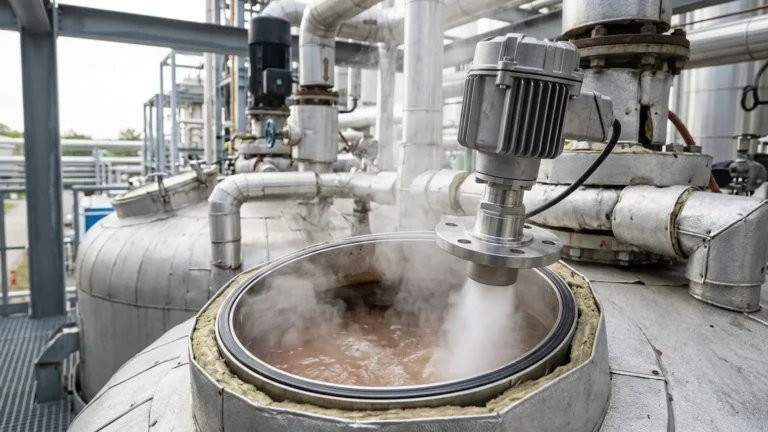
* Heated Processes: Warm liquid emitting vapor that rises and meets a cooler sensor mounted at the top of the vessel.
* Humid Environments: Wastewater treatment plants or underground sumps where humidity levels are consistently near 100%.
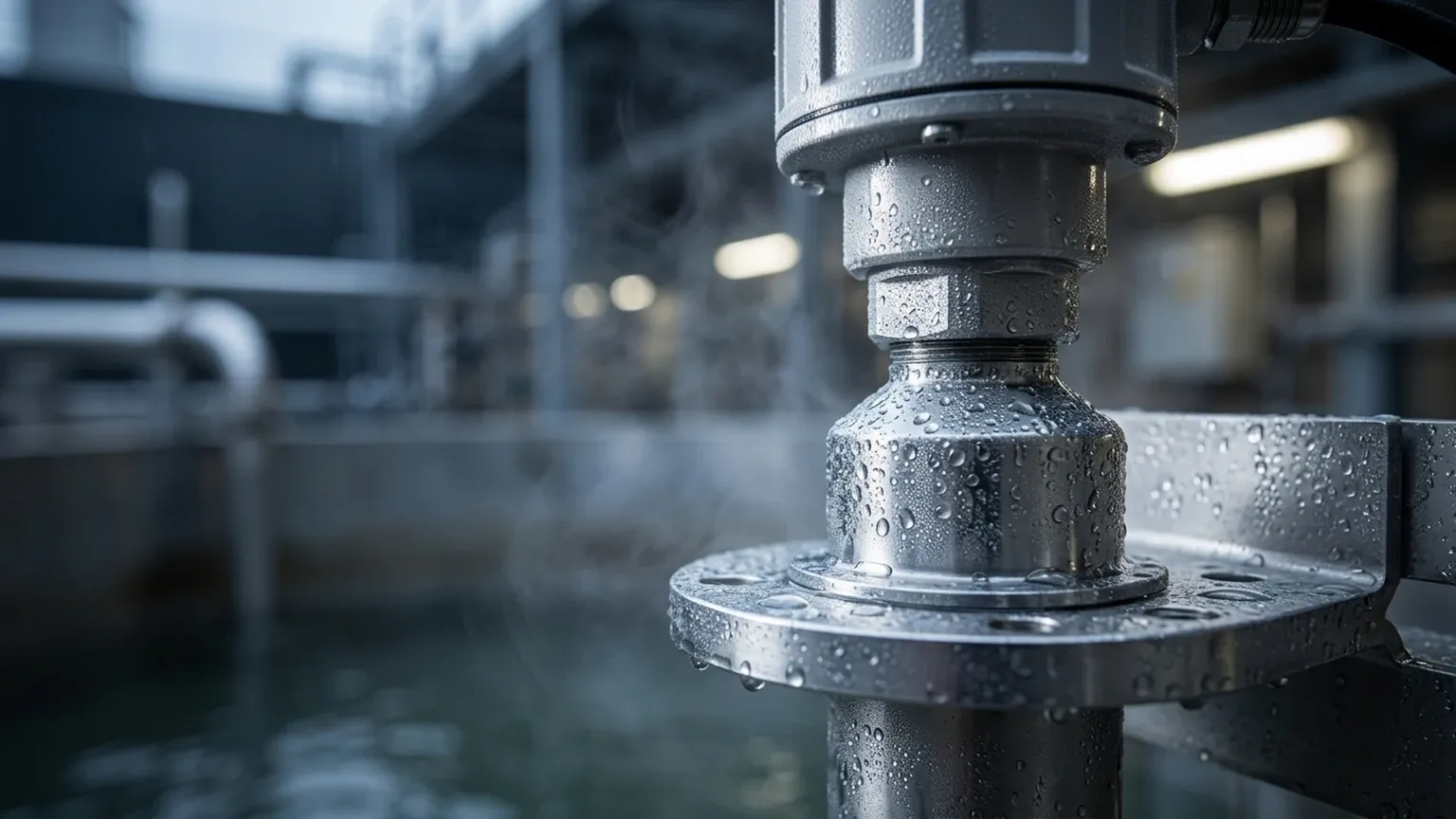
When water droplets form on the transducer face, they create a physical barrier. Because the acoustic impedance of water is significantly higher than that of air, the ultrasonic energy is absorbed or scattered by the droplets rather than being transmitted into the air. This results in a weakened pulse and a weakened return echo.
Impact on Measurement Accuracy and Reliability
1. Signal Attenuation
As droplets accumulate, the effective strength of the transmitted pulse decreases. In extreme cases of ultrasonic level sensor condensation, the signal may become too weak to reach the liquid surface and return, leading to a "Loss of Echo" (LOE) error.
2. The "Near Field" or Dead Zone Effect
Every ultrasonic sensor has a minimum measurable distance, known as the dead zone or blanking distance. Condensation can cause internal ringing within the transducer. The sensor may interpret the reflection from the water droplets on its own face as a high-level signal, causing the meter to report that the tank is full when it is actually empty.
3. Increased Maintenance Costs
If the sensor is not designed to handle moisture, operators may need to manually wipe the transducer face frequently, which is impractical in sealed tanks or hazardous environments.
Technical Solutions for Condensation Mitigation
Modern engineering has provided several methods to combat the effects of moisture on Ultrasonic Level Meters. When selecting a sensor for a humid application, consider the following technical features:
Hydrophobic Transducer Faces
Welk utilizes specialized materials like PTFE (Teflon) or PVDF for the transducer diaphragm. These materials are naturally hydrophobic, meaning water droplets struggle to adhere to the surface. Instead of forming a continuous film of water, the moisture forms small beads that are more likely to roll off or be shaken off by the transducer's own vibration.
High-Gain Signal Processing
Advanced digital signal processing (DSP) algorithms can distinguish between the "noise" caused by condensation and the actual "echo" from the liquid surface. By using an auto-gain control, the sensor can increase its sensitivity to detect weak echoes through a layer of moisture.
Self-Cleaning Vibrations
In many high-frequency ultrasonic sensors, the very act of the piezoelectric crystal vibrating to send a pulse helps to shed light condensation. This "self-cleaning" effect is most effective when the sensor is mounted vertically and the face material has low surface tension.
Heated Transducer Options
For extreme environments where frost or heavy condensation is a constant threat, some specialized sensors incorporate a low-power heating element behind the transducer face. By keeping the sensor surface a few degrees above the dew point, condensation is prevented from forming entirely.
Selection Guide: Choosing the Right Sensor
When evaluating equipment for applications prone to moisture, use the following table to guide your selection process:
| Feature | Standard Ultrasonic Sensor | Condensation-Resistant Sensor |
| :— | :— | :— |
| Face Material | Polyurethane or Epoxy | PTFE, PVDF, or UPVC |
| Enclosure Rating | IP65 / NEMA 4 | IP68 / NEMA 6P (Submersible) |
| Beam Angle | Wide (10° – 15°) | Narrow (5° – 8°) |
| Signal Logic | Basic ToF | Advanced False Echo Suppression |
| Best Use Case | Dry storage, indoor water tanks | Wastewater, chemical processing, outdoor sumps |
Practical Installation Considerations
Proper installation is the most cost-effective way to reduce the impact of ultrasonic level sensor condensation. Follow these engineering best practices:
1. Inclined Mounting: If the application allows, mounting the sensor at a very slight angle (1-2 degrees) can encourage water droplets to migrate to one side and drip off, rather than pooling in the center of the transducer face. However, ensure the angle does not exceed the beam's ability to receive the return echo.
2. Use of Standpipes: In some cases, mounting the sensor on a short standpipe can help. However, the standpipe itself can become a site for condensation. If using a standpipe, it must be smooth-walled and have a diameter large enough to prevent the ultrasonic beam from hitting the sides.
3. Insulation: Insulating the mounting nozzle or the sensor housing can reduce the temperature differential between the sensor face and the tank vapor, thereby preventing the dew point from being reached.
4. Avoid Turbulence and Inlets: Do not mount the sensor directly over a fill pipe. The combination of splashing and vapor will accelerate condensation and create signal noise.
Limitations and Alternative Technologies
While Ultrasonic Level Meters are versatile, they have physical limits. If the application involves the following, ultrasonic technology—even with condensation-resistant features—may not be the optimal choice:
* Heavy Steam: Unlike simple condensation, thick steam changes the density of the air, significantly altering the speed of sound and causing massive signal absorption.
* Vacuum Conditions: Sound waves require a medium (air/gas) to travel. Ultrasonic sensors will not work in a vacuum.
* High Pressure: Changes in pressure affect the accuracy of the ToF calculation.
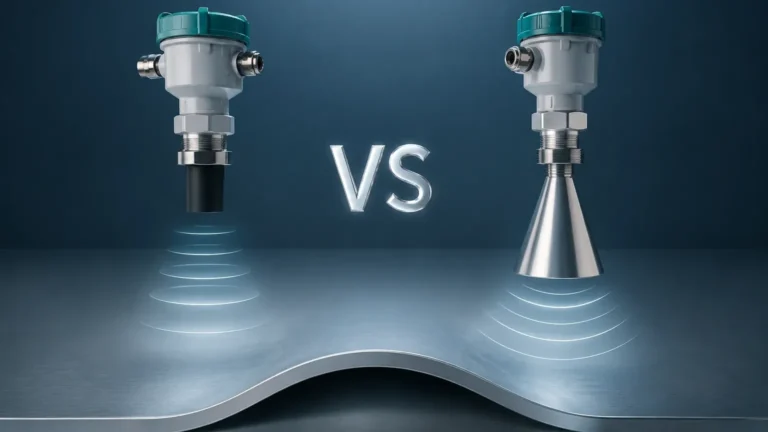
In these instances, Radar Level Meters (specifically 80GHz high-frequency radar) are often recommended. Radar uses electromagnetic waves which are unaffected by air density, steam, or vacuum, and can penetrate condensation more effectively than sound waves.
Frequently Asked Questions (FAQ)
Q: Can I wipe the transducer face with cleaning chemicals?
A: You should only use cleaners compatible with the face material (e.g., mild soap for PVDF). Avoid abrasive cleaners that could scratch the surface, as scratches provide more surface area for water droplets to cling to.
Q: Does condensation affect the accuracy of the distance reading?
A: Indirectly, yes. While the condensation itself doesn't change the speed of sound, the high humidity associated with it does. Most Welk sensors compensate for temperature, but extreme humidity can cause a small variance (typically <1%) in the speed of sound.
Q: My sensor shows a full tank whenever it rains. Is this condensation?
A: It is likely either condensation or water droplets hanging from the sensor face, creating a reflection within the dead zone. Check the "blanking distance" settings in your device configuration and ensure the sensor has a clear, unobstructed path.
Q: Is there a way to "see" if condensation is the problem via the sensor's output?
A: Yes. Many modern Ultrasonic Level Meters provide a "Signal Strength" or "Echo Quality" metric. If this value drops significantly during temperature shifts while the level remains constant, condensation is the likely culprit.
Conclusion
Ultrasonic level sensor condensation is a manageable challenge in industrial level measurement. By selecting instruments with hydrophobic materials like PTFE, utilizing advanced signal processing, and following precision installation guidelines, operators can ensure reliable data even in the most humid environments. For applications where moisture is accompanied by high pressure or heavy steam, consulting with a technical specialist at Welk can help determine if ultrasonic or radar technology is better suited for your specific process requirements.
For more information on selecting the right instrument for your facility, Review product options and application support to find the ideal solution for your measurement needs.