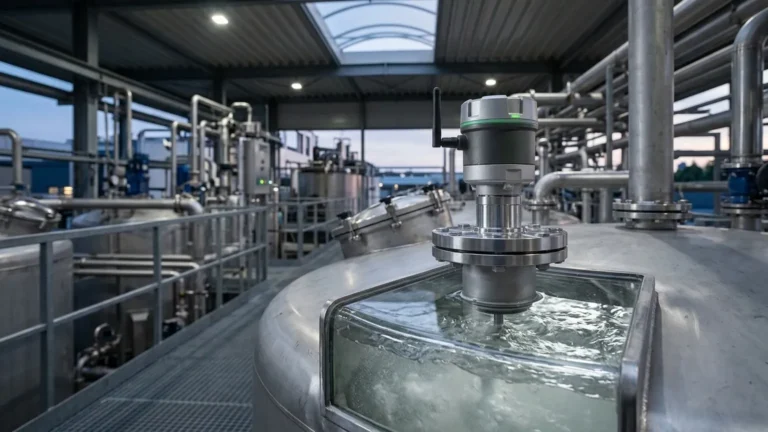
Ultrasonic Level Sensor Non Contact
Ultrasonic Level Sensor Non Contact: A Technical Guide to Selection and Application
In the landscape of industrial automation, the ability to monitor fluid and solid levels without physical interaction is a significant advantage. The ultrasonic level sensor non contact approach has become a standard in sectors ranging from wastewater management to chemical processing. By utilizing sound waves rather than mechanical floats or pressure diaphragms, these instruments offer a low-maintenance, highly reliable solution for diverse process environments.
As a professional manufacturer, Welk specializes in providing high-performance Ultrasonic Level Meters designed to meet the rigorous demands of modern industry. This guide explores the fundamental physics, selection criteria, and installation best practices for non-contact ultrasonic technology.
Understanding the Measurement Principle
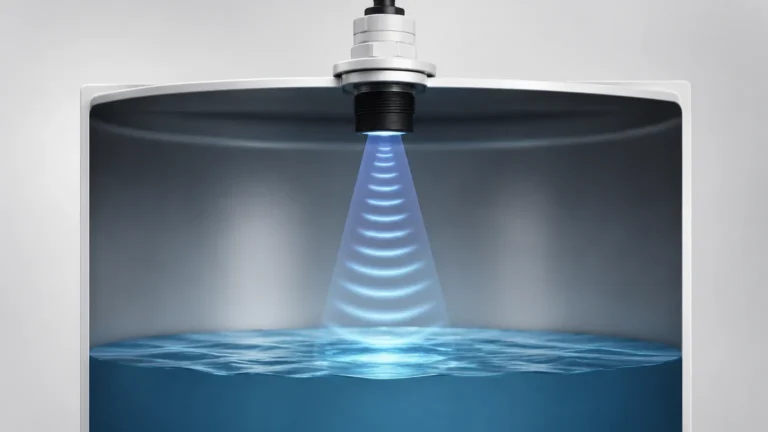
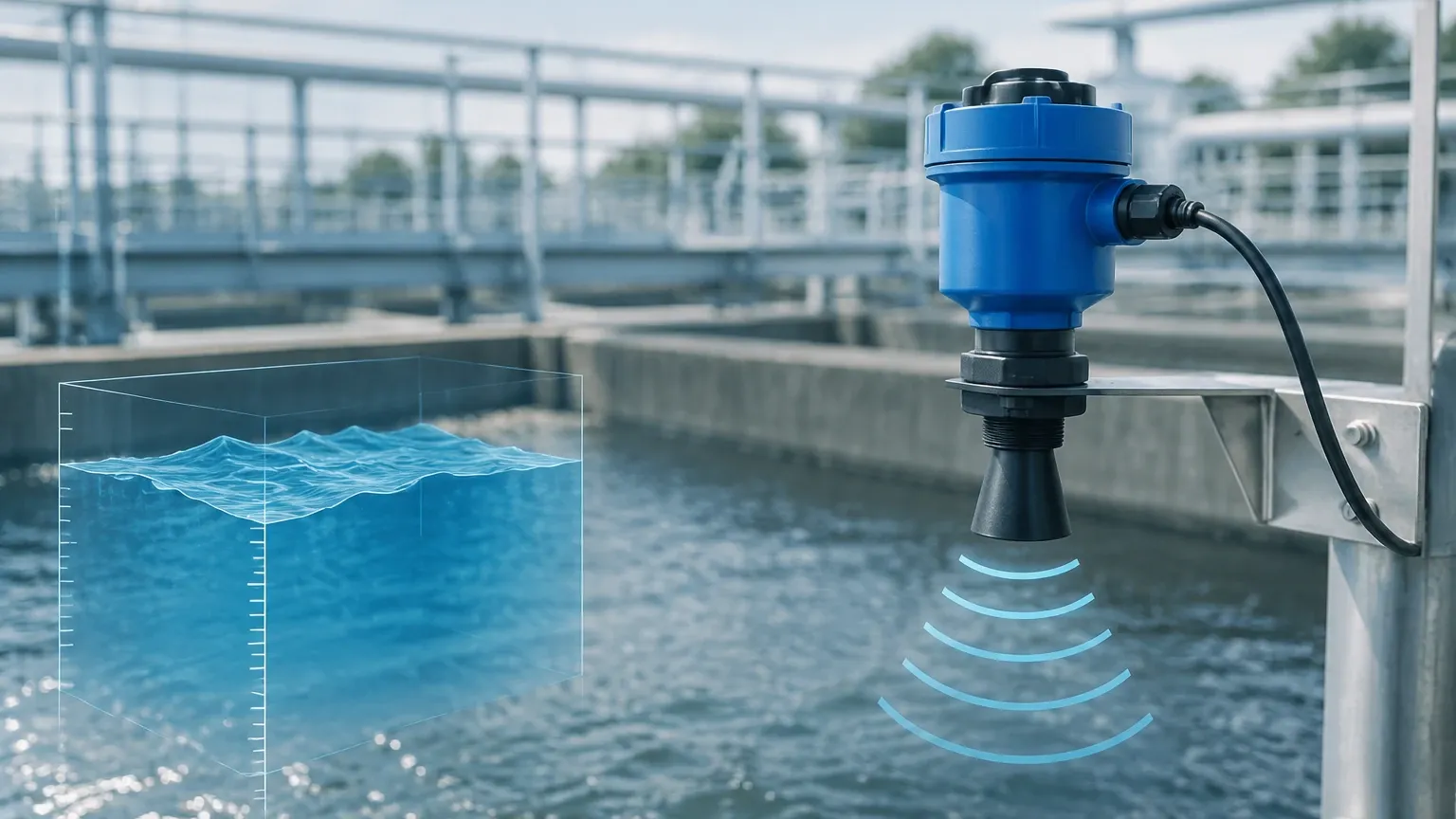
Non-contact ultrasonic level measurement is based on the "Time-of-Flight" (ToF) principle. The sensor, typically mounted at the top of a vessel, contains a piezoelectric transducer that converts electrical energy into mechanical pulses of sound at frequencies above the human hearing range (usually between 20 kHz and 200 kHz).
The Measurement Cycle
1. Emission: The sensor emits a short ultrasonic pulse toward the surface of the material being measured.
2. Propagation: The sound wave travels through the air space (the "ullage") at the speed of sound.
3. Reflection: Upon hitting the surface of the liquid or solid, the pulse is reflected back toward the sensor.
4. Reception: The transducer receives the echo and converts it back into an electrical signal.
The distance ($D$) between the sensor and the material surface is calculated using the formula:
$$D = \frac{c \times t}{2}$$
Where:
* $c$ is the speed of sound in the medium (typically air).
* $t$ is the total time elapsed from emission to reception.
Since the height of the vessel ($H$) is a known constant programmed into the meter, the level ($L$) is determined by subtracting the measured distance from the total height ($L = H – D$).
The Importance of Temperature Compensation
The speed of sound in air is not constant; it varies with temperature. At 0°C, the speed of sound is approximately 331.5 m/s, increasing by roughly 0.6 m/s for every degree Celsius rise. To maintain accuracy, a high-quality ultrasonic level sensor non contact must include an integrated temperature sensor to provide real-time compensation for these atmospheric changes.
Why Choose Non-Contact Sensing?
The primary driver for adopting non-contact technology is the elimination of physical wear and chemical compatibility issues. Traditional contact methods, such as float switches or bubblers, are susceptible to:
* Corrosion: Acids and bases can degrade wetted parts.
* Clogging: Viscous liquids or slurries can jam mechanical components.
* Contamination: In food and beverage or pharmaceutical applications, contact probes can introduce bacteria or cross-contaminate batches.
By using an ultrasonic level sensor non contact, the instrument remains safely outside the medium, ensuring a longer service life and reduced operational costs.
Practical Selection Criteria
Choosing the right instrument requires an understanding of the process environment. While ultrasonic meters are versatile, they are not "one-size-fits-all" solutions. Engineers should evaluate the following parameters:
1. Measurement Range
Ultrasonic sensors are available for various ranges, typically from 0.25 meters up to 30 meters. Higher frequency sensors provide better resolution but have a shorter range because high-frequency sound attenuates faster in air. Conversely, lower frequency sensors can penetrate further but may have a larger "dead zone."
2. The Dead Zone (Blocking Distance)
Every ultrasonic sensor has a minimum distance it cannot measure, known as the dead zone or blocking distance. This occurs because the transducer cannot receive an echo while it is still vibrating from the initial emission. Typical dead zones range from 0.20m to 0.6m. It is critical to mount the sensor high enough so that the maximum liquid level never enters this zone.
3. Material Characteristics
* Liquids: Generally provide an excellent reflective surface. However, heavy foam can absorb the ultrasonic signal, leading to inaccurate readings or signal loss.
* Solids: Granular materials (like grain or plastic pellets) reflect sound in different directions. For solids, sensors with higher power and specialized signal processing are often required.
4. Output and Connectivity
Standard industrial outputs include 4-20mA (analog), RS485 (Modbus), or HART protocols. For remote locations, integrated wireless options may be considered.
Selection Comparison Table
| Feature | Integrated Ultrasonic Meter | Split-Type Ultrasonic Meter |
| :— | :— | :— |
| Configuration | Sensor and electronics in one housing | Sensor and remote controller connected by cable |
| Installation | Simple, single-point mounting | Requires mounting two components |
| Environment | Best for standard tanks and sumps | Ideal for hazardous or high-temp areas (remote display) |
| Maintenance | Low | Low (easier access to display) |
| Typical Range | 2m to 15m | 5m to 30m |
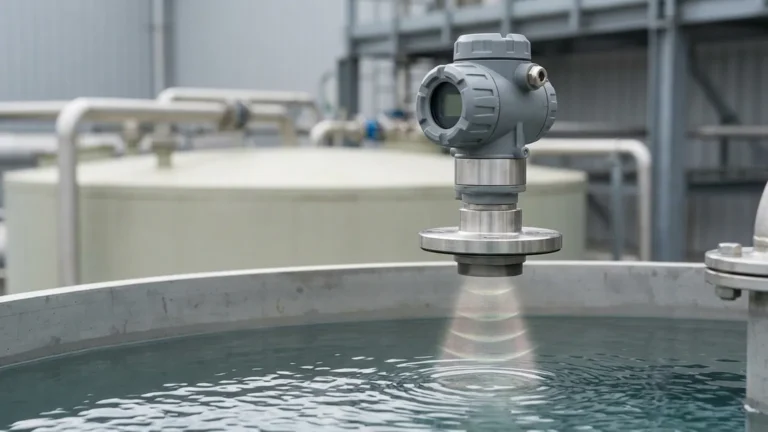
| Protection | Typically IP65/IP67 | Sensor IP68 / Controller IP65 |
Installation Considerations
Correct installation is the most critical factor in ensuring the performance of an ultrasonic level sensor non contact. Even the most advanced meter will fail if the acoustic path is obstructed.
Beam Angle and Obstructions
The ultrasonic pulse spreads out in a cone shape, usually between 5° and 12°. The entire area within this cone must be free of obstructions such as pipes, ladders, or agitators. If the signal hits an obstruction, it will create a "false echo," which the meter might interpret as the actual level.
Positioning Guidelines
* Avoid the Center: Do not mount the sensor in the exact center of a circular tank, as this can concentrate multiple reflections (parabolic effect) and confuse the sensor.
* Wall Distance: Maintain a distance from the tank wall of at least 1/6th of the tank height to prevent interference from wall seams or welds.
* Perpendicularity: The sensor face must be perfectly parallel to the liquid surface. A tilt of even a few degrees can cause the reflected signal to miss the transducer.
* Inflow Avoidance: Never install the sensor directly above the filling inlet. The falling liquid will disrupt the signal and create turbulence.
Limitations and Environmental Factors
While highly effective, ultrasonic technology has physical boundaries that engineers must respect:
1. Vacuum Conditions: Sound waves require a medium (air or gas) to travel. Ultrasonic sensors cannot function in a vacuum.
2. High Pressure: High pressure changes the density of the air, affecting the speed of sound and the efficiency of the transducer. Most ultrasonic meters are rated for near-atmospheric pressure.
3. Heavy Vapor/Dust: While moderate dust is acceptable, extremely dense dust or heavy steam can scatter the sound waves, reducing the effective range.
4. Temperature Gradients: If there is a significant temperature difference between the sensor and the liquid surface (e.g., in a heated tank), the speed of sound will vary along the path, potentially causing errors if not properly compensated.
Industrial Applications
Water and Wastewater
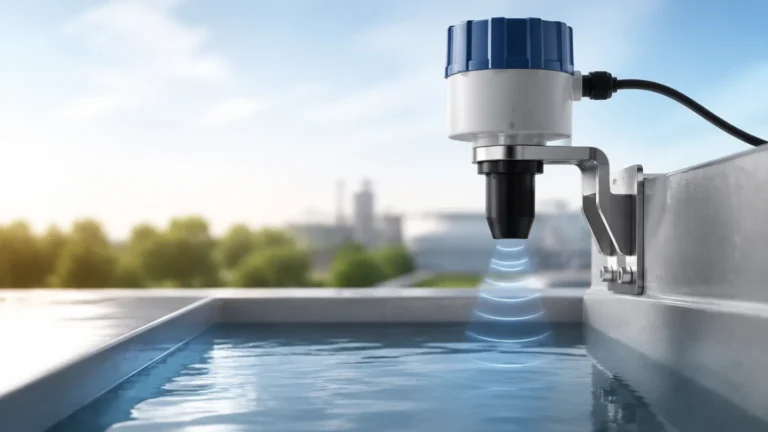
This is the most common application for ultrasonic level sensor non contact technology. It is used for monitoring reservoir levels, open channel flow measurement (using flumes or weirs), and wet well levels in lift stations. The non-contact nature prevents fouling from grease and debris.
Chemical Processing
For corrosive chemicals like sulfuric acid or caustic soda, ultrasonic meters with PVDF or PTFE-coated transducers provide a durable solution that resists chemical attack while keeping electronic components isolated from fumes.
Food and Beverage
In storage tanks for milk, juice, or oils, maintaining hygiene is paramount. Non-contact sensors eliminate the need for cleaning probes and ensure that there are no stagnant areas where bacteria could grow.
Frequently Asked Questions (FAQ)
Q: Can ultrasonic sensors measure the level of solids?
A: Yes, but with caveats. Solids like sand or grain have an "angle of repose" and a rough surface that scatters sound. You generally need a sensor with a higher power output and a narrower beam angle than you would use for liquids.
Q: What happens if there is foam on the liquid?
A: Light, airy foam can absorb the ultrasonic pulse, resulting in a "Lost Echo" error. If heavy foam is expected, a radar level meter or a contact-based solution like a magnetic level gauge might be more appropriate.
Q: How far can the controller be from the sensor in a split-type system?
A: Typically, the cable length can be up to 50 or 100 meters, depending on the manufacturer and the environment's electromagnetic interference (EMI).
Q: Does the tank material affect the measurement?
A: Generally, no. Whether the tank is plastic, steel, or concrete, the sensor only cares about the reflection from the material surface. However, the tank's internal geometry (ribs, welds) can cause interference if the sensor is mounted too close to the wall.
Conclusion
The ultrasonic level sensor non contact remains one of the most cost-effective and reliable methods for automated level monitoring. By understanding the acoustic principles and following strict installation guidelines, industrial operators can achieve high precision without the maintenance headaches associated with contact-based instruments.
For technical assistance in selecting the right frequency, range, and housing material for your specific application, Welk offers a comprehensive range of Ultrasonic Level Meters backed by expert engineering support. Ensuring the right fit between the technology and the process environment is the key to long-term operational success.