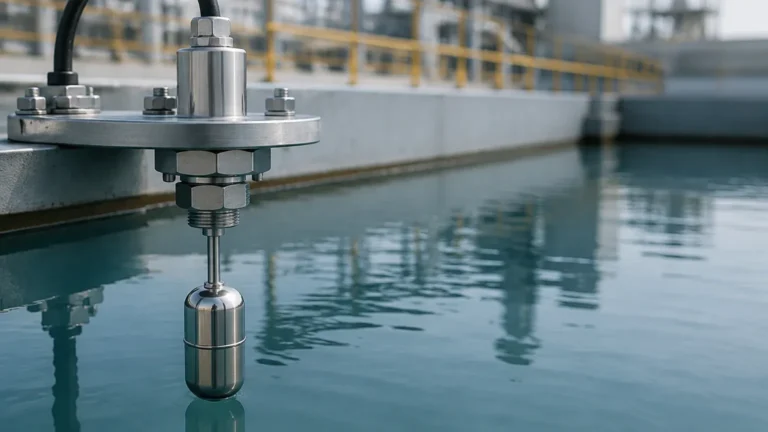
Industrial Level Switches
Industrial Level Switches
In the landscape of industrial automation and process safety, point level detection serves as a critical layer of control. Unlike continuous level transmitters that provide a constant stream of data regarding the exact volume or height of a substance, industrial level switches are designed to trigger a discrete electrical signal when a specific level is reached. These devices are essential for preventing tank overflows, protecting pumps from dry running, and managing automated filling or emptying sequences.
Selecting the appropriate technology for industrial level switches requires a deep understanding of the physical properties of the media, the environmental conditions of the process, and the specific mechanical constraints of the vessel. This guide explores the fundamental measurement principles, selection criteria, and installation best practices for point level detection in industrial environments.
Measurement Principles of Level Switches
Before selecting a device, engineers must understand the underlying physics that allow a switch to detect the presence or absence of a material. Industrial level switches utilize various physical phenomena, ranging from mechanical buoyancy to piezoelectric vibration.
1. Float and Displacement Principles
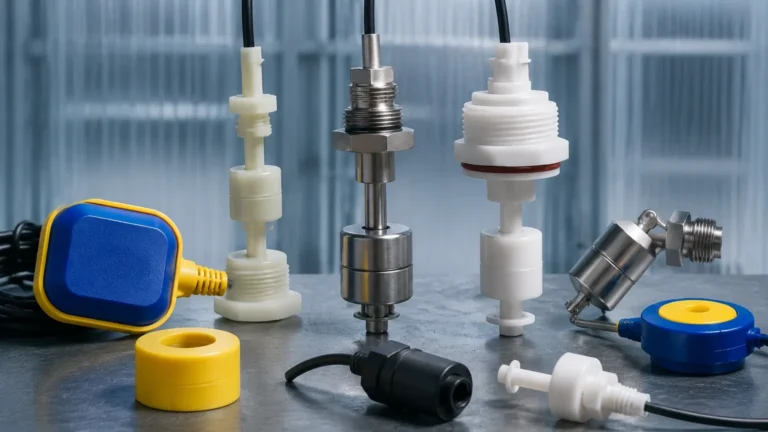
Float switches operate on the principle of buoyancy. A float, typically made of stainless steel or chemically resistant plastic, moves with the liquid level. When the float reaches a predetermined point, it mechanically or magnetically actuates a microswitch or reed switch.
Displacement switches, while similar, rely on Archimedes' principle. A weight (displacer) heavier than the liquid is suspended by a spring. As the liquid rises and covers the displacer, the apparent weight of the displacer decreases due to buoyancy, causing the spring to retract and trigger the switch. This method is often preferred for high-pressure applications or where turbulent surfaces might disturb a standard float.
2. Vibrating Fork (Tuning Fork) Technology
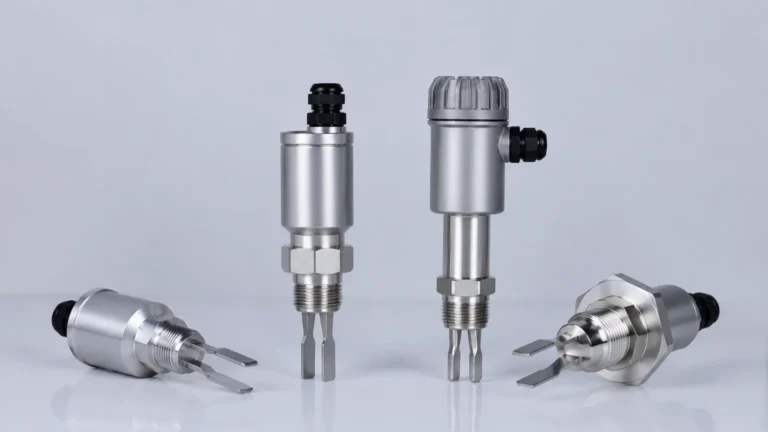
Vibrating level switches use a piezoelectric crystal to energize a fork-shaped sensor at its natural resonant frequency. When the fork is immersed in a liquid or solid, the frequency changes or the vibration is dampened. The internal electronics detect this shift and convert it into a switching signal. This technology is highly versatile because it is largely unaffected by the dielectric constant, conductivity, or turbulence of the media.
3. Capacitance and RF Admittance
Capacitance switches treat the sensor probe and the tank wall (or a second probe) as two plates of a capacitor. The material in the tank acts as the dielectric. As the level rises and covers the probe, the dielectric constant changes, increasing the measured capacitance. RF Admittance is an advanced version of this principle that uses a specific frequency to ignore the effects of material buildup on the probe, making it ideal for sticky or coating substances.
4. Conductivity Measurement
Conductive level switches are used for liquids with a minimum level of electrical conductivity (typically >10 µS/cm). The system uses a low-voltage electrode; when the conductive liquid touches the electrode, it completes an electrical circuit between the probe and the tank wall (or a reference electrode), triggering the output. This is a cost-effective solution for water-based applications.
5. Rotary Paddle Switches
Designed specifically for bulk solids and powders, rotary paddle switches utilize a low-speed motor that rotates a paddle. When the solid material reaches the paddle, it creates mechanical resistance, stalling the motor and tripping the switch contact. Once the material level drops, a spring returns the motor to its original position, and rotation resumes.
Key Considerations for Industrial Level Switches
When integrating Level Switches into an industrial process, several technical factors dictate the reliability of the installation. Industrial-grade switches differ from commercial versions through their robust housing, higher pressure ratings, and specialized certifications (such as ATEX or SIL).
Media Properties
* State: Is the material a liquid, slurry, powder, or granular solid?
* Density/Specific Gravity: Float switches require the float to be less dense than the liquid. For vibrating forks, the media must have sufficient density to dampen the vibration.
* Viscosity: High-viscosity liquids can cause "clinging" on mechanical parts, leading to false positives.
* Chemical Compatibility: The wetted parts (316L stainless steel, PTFE, Hastelloy) must withstand the corrosiveness of the media.
Process Conditions
* Temperature: Industrial processes can range from cryogenic levels to over 400°C. High-temperature applications often require remote electronics or cooling fins.
* Pressure: Standard switches may handle up to 40 bar, while specialized high-pressure versions can exceed 100 bar.
* Turbulence and Foam: Mechanical floats may struggle with turbulence, whereas ultrasonic or vibrating fork switches are more resilient. Foam can be problematic for capacitance switches unless they are specifically calibrated to ignore it.
Practical Selection Table
| Technology | Best For | Advantages | Limitations |
| :— | :— | :— | :— |
| Float Switch | Clean liquids, water tanks | Low cost, no power required (passive) | Sensitive to debris and turbulence |
| Vibrating Fork | Liquids, powders, grains | High reliability, no calibration needed | Not for very high viscosity/sticky media |
| Capacitance | Corrosive liquids, solids | No moving parts, handles high temp/pressure | Requires calibration; affected by dielectric changes |
| Conductive | Water, acids, alkalis | Simple, very low cost | Only for conductive liquids; probe coating issues |
| Rotary Paddle | Grains, sand, plastic pellets | Robust for heavy solids | Mechanical wear; not for liquids |
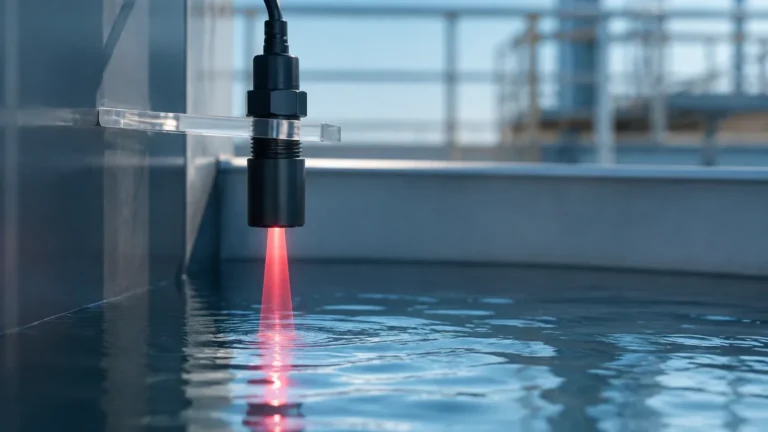
| Optical | Clean, non-coating liquids | Extremely compact, fast response | Affected by ambient light or coating on the lens |
Installation and Engineering Best Practices
Proper installation is as critical as technology selection. Even the most advanced industrial level switches will fail if positioned incorrectly.
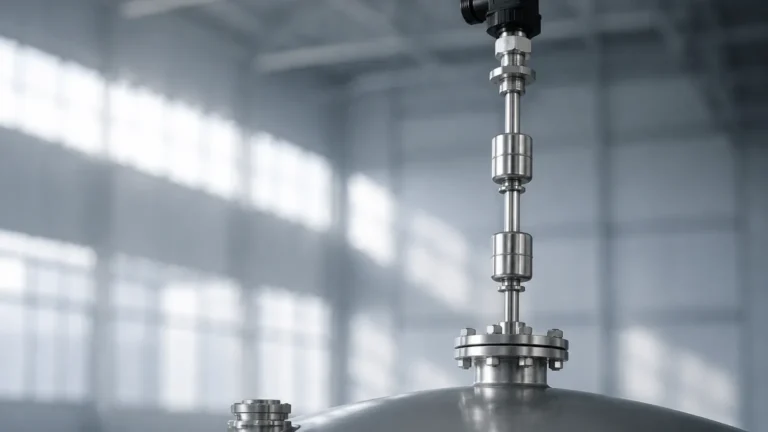
1. Mounting Orientation: Switches can be mounted laterally (side-mount) or vertically (top-mount). Side-mounting is common for high/low alarms, while top-mounting is preferred when the tank cannot be breached at the side or when multiple setpoints are needed on a single probe.
2. Avoid Dead Zones: Ensure the switch is not located in a "dead zone" where material might bridge or accumulate, such as near an inlet pipe or in a narrow nozzle.
3. Nozzle Length: For vibrating fork and capacitance switches, the active part of the sensor must extend beyond the mounting nozzle into the vessel to ensure accurate contact with the media.
4. Protection from Flow: If the switch is located near an agitator or a high-velocity inlet, use a baffle or a stilling well to protect the sensor from mechanical stress and false triggers.
5. Wiring and Cable Glands: In industrial environments, moisture ingress is a leading cause of failure. Always point cable glands downward and use drip loops to prevent condensation from entering the housing.

Limitations and Common Risks
While industrial level switches are robust, they are not infallible. Engineers should be aware of the following risks:
* Material Buildup: In applications involving slurries or wastewater, material can cake onto the sensor. While RF Admittance and vibrating forks offer some resistance, regular inspection is necessary.
* Electromagnetic Interference (EMI): Electronic switches (capacitance/ultrasonic) can be affected by nearby heavy machinery or VFDs. Shielded cabling and proper grounding are mandatory.
* Mechanical Fatigue: In high-vibration environments, mechanical switches (floats/paddles) may suffer from premature component failure. Solid-state electronics are generally preferred in these scenarios.
Frequently Asked Questions (FAQ)
Q: Can a level switch be used for continuous measurement?
A: No. A level switch provides a binary output (on/off). For continuous tracking of 0-100% volume, a level transmitter (radar, ultrasonic, or hydrostatic) is required.
Q: How do I handle applications with heavy foam?
A: Foam can be tricky. If you want to detect the liquid level *under* the foam, a displacement or vibrating fork switch is usually effective. If you want to detect the foam itself, a specialized capacitance switch calibrated to a low dielectric constant is often used.
Q: What is the difference between SPDT and DPDT contacts in a switch?
A: SPDT (Single Pole Double Throw) has one set of contacts to control one circuit. DPDT (Double Pole Double Throw) has two sets, allowing the switch to control two independent circuits simultaneously (e.g., one for a pump and one for a remote alarm).
Q: Are there level switches suitable for hygienic/food-grade applications?
A: Yes. Look for switches with 3-A or EHEDG certification, featuring stainless steel construction and specialized process connections like Tri-Clamp to prevent bacterial growth.
Conclusion
Industrial level switches are foundational components in modern process control. By understanding the specific requirements of the application—such as the density of the media, the pressure of the environment, and the potential for buildup—engineers can select a point level solution that ensures safety and efficiency. Whether utilizing the simplicity of a float or the advanced physics of a vibrating fork, correct selection and installation remain the keys to long-term operational success.