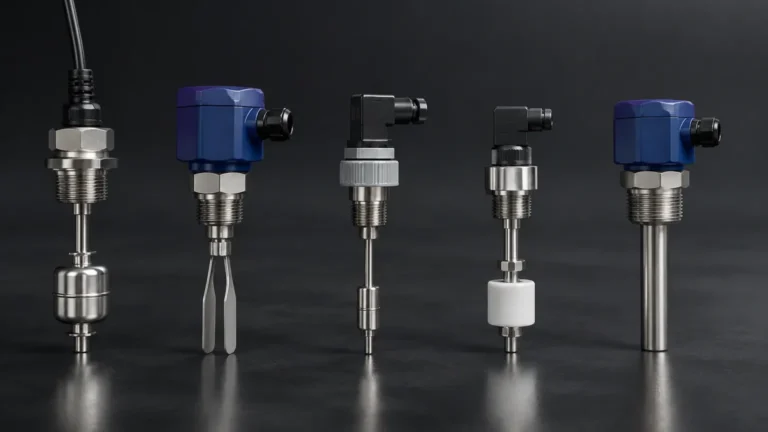
3 Position Level Switch
3 Position Level Switch
In industrial process control, the ability to monitor multiple points within a single vessel is critical for both operational efficiency and safety. While standard level switches typically provide a single point of detection (high or low), a 3 position level switch offers a more sophisticated solution by monitoring three distinct levels within a tank or sump. This configuration is frequently utilized for complex pump control logic, multi-stage alarms, and overflow prevention in water treatment, chemical processing, and oil and gas applications.
Understanding the mechanical and electrical principles of these devices is essential for engineers and technicians tasked with specifying instrumentation for automated systems. By integrating three detection points into a single mounting assembly, facilities can reduce installation costs, minimize tank penetrations, and simplify wiring architectures.
Measurement Principles of Multi-Point Level Switches
Before selecting a 3 position level switch, it is necessary to understand how these devices translate physical liquid levels into electrical signals. There are several technologies used to achieve multi-point detection, each with specific strengths depending on the media being measured.
Magnetic Float Principle
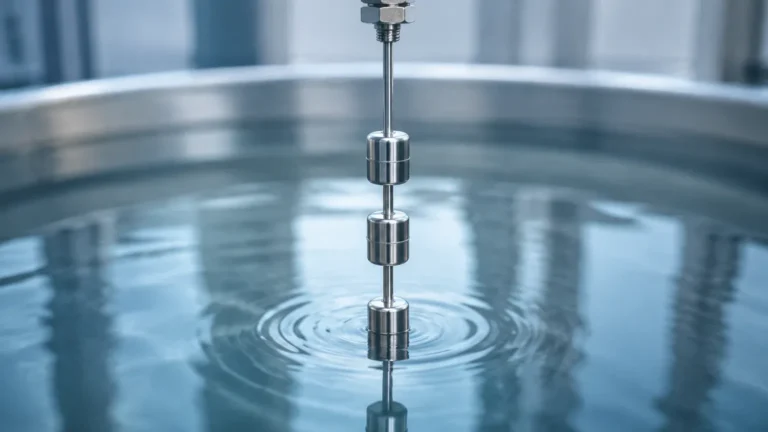
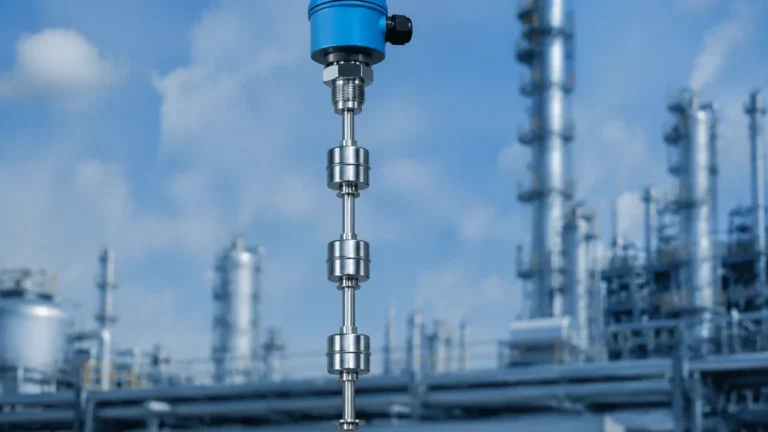
The most common technology for a 3 position level switch is the magnetic float principle. This design consists of a hollow stem containing three stationary reed switches positioned at specific heights. A float, which contains a permanent magnet, slides up and down the stem as the liquid level changes.
When the float reaches the height of a reed switch, the magnetic field causes the switch contacts to open or close. In a 3-position setup, the stem may feature a single float that travels the entire length to trigger all three points, or three separate floats restricted by stop collars to specific zones. The latter is often preferred in turbulent environments to ensure that each level point is triggered independently and reliably.
Conductivity Principle
For conductive liquids, such as water or acids, conductivity level switches are an effective multi-point solution. This system uses three stainless steel probes (electrodes) of varying lengths. A low-voltage current is applied to the probes. When the liquid touches a probe, it completes an electrical circuit between that probe and a reference ground (often the tank wall or a fourth "common" probe). Each probe length corresponds to one of the three positions, providing a solid-state switching action without moving parts.
Ultrasonic and Optical Variations
While traditional 3 position level switches are mechanical or conductive, some advanced ultrasonic sensors or multi-point optical switches can emulate this behavior. Ultrasonic sensors use sound waves to measure distance and can be programmed with three discrete relay outputs. Optical switches use infrared light refraction; in a multi-point configuration, three separate optical sensing tips are integrated into a single probe body. These are ideal for clean liquids where mechanical floats might stick due to light crystallization.
Applications for 3 Position Level Switches
The requirement for three detection points usually stems from a need for "Control + Alarm" logic. Below are the most frequent industrial scenarios where these Level Switches are deployed.
1. Pump Control with High-Level Alarm
In wastewater sumps or chemical transfer tanks, a 3 position level switch is often configured as follows:
* Position 1 (Bottom): Pump Stop. This prevents the pump from running dry and cavitating.
* Position 2 (Middle): Pump Start. This initiates the drainage or transfer process once the tank reaches a certain volume.
* Position 3 (Top): High-Level Alarm. If the pump fails to start or the inflow exceeds pump capacity, this switch triggers an audible alarm or an emergency shut-off valve.
2. Tank Filling with Low-Level Alarm
For storage tanks that must remain filled (e.g., boiler feed water), the logic is reversed:
* Position 1 (Top): Fill Stop. Prevents overfilling.
* Position 2 (Middle): Fill Start. Opens the inlet valve when the level drops.
* Position 3 (Bottom): Low-Level Alarm. Warns operators that the supply is critically low, potentially protecting downstream equipment.
3. Dual-Pump Sequencing
In more complex systems, the three positions can manage two pumps. The first position starts Pump A, the second position starts Pump B (for high-demand periods), and the third position acts as a master stop or a high-level safety alert.
Technical Selection Criteria
Choosing the correct 3 position level switch requires a detailed analysis of the process media and the physical environment. Engineers should evaluate the following criteria to ensure long-term reliability.
Material Compatibility
The wetted parts of the switch must be chemically resistant to the process fluid.
* Stainless Steel (304 or 316L): Standard for water, oils, and high-temperature/high-pressure applications.
* Polypropylene (PP): Suitable for general acidic or alkaline solutions at lower temperatures.
* PVDF/PTFE: Reserved for highly aggressive chemicals or high-purity applications where metal contamination must be avoided.
Pressure and Temperature Ratings
Mechanical float switches are sensitive to pressure. If the pressure is too high, the float can collapse, losing its buoyancy. Standard industrial floats are often rated up to 10 bar (145 psi), though high-pressure versions are available. Similarly, temperature affects the density of the liquid and the integrity of the internal reed switches. Always verify that the operating temperature does not exceed the switch's maximum rating, typically ranging from -20°C to 120°C for standard models.
Specific Gravity
The float must be lighter than the liquid it is intended to measure. Most standard floats are designed for liquids with a specific gravity (SG) of 0.8 or higher. For light hydrocarbons or liquefied gases, specialized low-SG floats are required.
Output Type and Electrical Load
Decide whether the application requires Normally Open (NO) or Normally Closed (NC) contacts. Many 3 position level switches allow the user to reverse the switch logic by flipping the float 180 degrees. Additionally, ensure the reed switches can handle the electrical load. Most are designed for low-current signaling (e.g., 0.5A at 24V DC) and require an external relay to drive heavy motors or pumps.
Selection Table: Technology Comparison
| Feature | Magnetic Float | Conductivity Probes | Optical Multi-Point |
| :— | :— | :— | :— |
| Media Type | Clean liquids, oils | Conductive liquids (water, acids) | Clean, non-coating liquids |
| Moving Parts | Yes (Floats) | No | No |
| Max Positions | Up to 6+ | Limited by probe spacing | Typically 1-4 |
| Viscosity Limit | Low to Medium | High (if non-coating) | Low |
| Pressure Resistance | Moderate (Float dependent) | High | High |
| Maintenance | Periodic cleaning of floats | Cleaning of probe tips | Cleaning of optical lens |

Installation Considerations
Proper installation is as critical as the selection of the device itself. Failure to follow engineering best practices can lead to false triggers or premature mechanical failure.
1. Vertical Alignment: Most 3 position level switches based on float technology must be installed within 30 degrees of vertical. Excessive tilting can cause the float to bind against the stem, preventing it from tracking the liquid level.
2. Avoid Turbulence: If the switch is installed near a high-velocity inlet pipe, the resulting turbulence can cause the float to bounce, leading to "chatter" in the electrical contacts. In these cases, a stilling well (a pipe surrounding the switch stem) should be used to provide a calm surface for measurement.
3. Magnetic Interference: Since these switches rely on internal magnets, they should be kept away from strong external magnetic fields, such as those generated by large motors or transformers, which could inadvertently trigger the reed switches.
4. Wiring and Separation: Ensure that the wiring for the three distinct positions is clearly labeled. In many industrial setups, the three switches share a common ground wire to reduce the number of conductors required in the cable run.
Limitations and Risks
While highly versatile, 3 position level switches have specific limitations:
* Coating and Scaling: In applications like wastewater or lime slurry, material can build up on the stem or probes. For float switches, this may cause the float to stick. For conductivity probes, a conductive coating can create a "bridge," leading to a permanent "on" signal.
* Mechanical Wear: Because float switches involve moving parts, they have a finite mechanical lifespan. In applications with constant level fluctuations, the reed switches may eventually fail after millions of cycles.
* Fixed Setpoints: Unlike continuous radar or ultrasonic transmitters, the positions on a mechanical 3-point switch are usually fixed at the factory. While some models allow for field adjustment by moving stop collars, this is more labor-intensive than changing a software setting.
Frequently Asked Questions (FAQs)
Q: Can a 3 position level switch be used in hazardous areas?
A: Yes, but they must be used in conjunction with an intrinsically safe (IS) barrier or be housed in an explosion-proof enclosure. Since the internal reed switches are simple passive components, they are easily integrated into IS circuits.
Q: What is the maximum length for a 3-position float switch stem?
A: Most manufacturers can produce stems up to 3 meters (approx. 10 feet). For lengths exceeding this, the stem may require additional bracing to prevent bending due to fluid movement.
Q: How do I change the switch logic from Normally Open to Normally Closed?
A: On most magnetic float models, you can remove the retaining clip at the bottom of the stem, slide the float off, flip it over, and reinstall it. This reverses the polarity of the magnet relative to the reed switch.
Q: Is it possible to have different materials for the stem and the floats?
A: Yes. It is common to use a stainless steel stem for structural rigidity with plastic floats (like PP or Buna-N) for better buoyancy in low-density liquids.
For engineers seeking reliable point-level detection, the 3 position level switch remains a foundational tool. By combining multiple control functions into a single instrument, these devices provide a cost-effective and robust solution for modern industrial automation. To explore specific configurations and material options, you can Review product options and application support to find the ideal match for your process requirements.