Jerguson Level Switches
Jerguson Level Switches
In industrial process control, point level detection serves as a critical safety and operational layer. Among the various manufacturers in this space, Jerguson has established a long-standing reputation, particularly within high-pressure and high-temperature environments such as power generation, oil refining, and chemical processing. This guide examines the engineering principles, selection criteria, and installation requirements for Jerguson level switches and similar heavy-duty industrial level instrumentation.
Understanding Point Level Measurement Principles
Before selecting a specific switch, it is essential to understand the physics governing point level detection. Unlike continuous level transmitters that provide a 4-20mA or digital signal representing the exact level, Level Switches are designed to trigger a discrete output (on/off) when a liquid reaches a predetermined height.
The Buoyancy Principle (Archimedes' Principle)
Most Jerguson level switches operate based on buoyancy. Archimedes' principle states that any object, wholly or partially immersed in a fluid, is buoyed up by a force equal to the weight of the fluid displaced by the object. In level switching, this is applied in two primary ways:
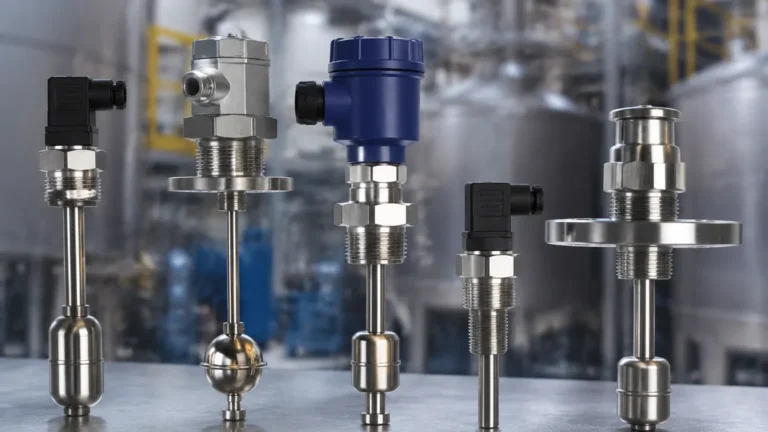
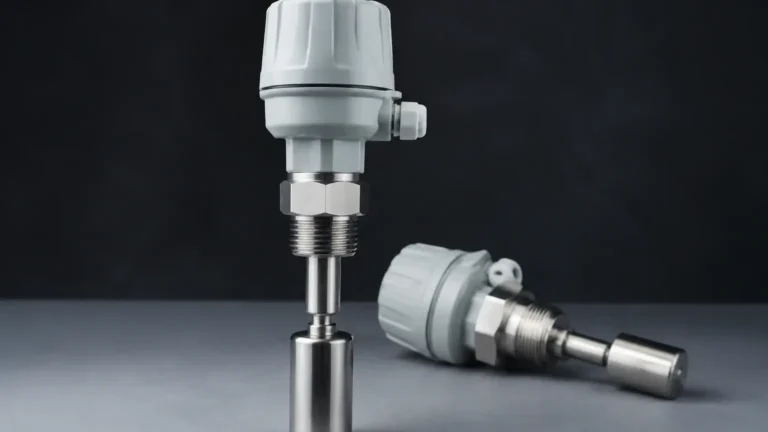
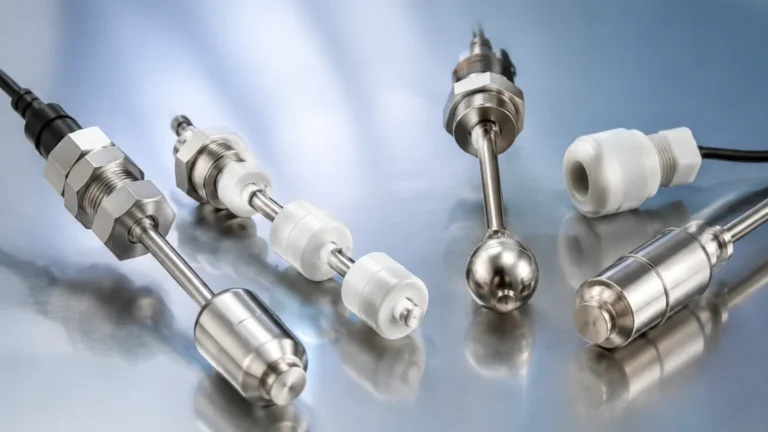
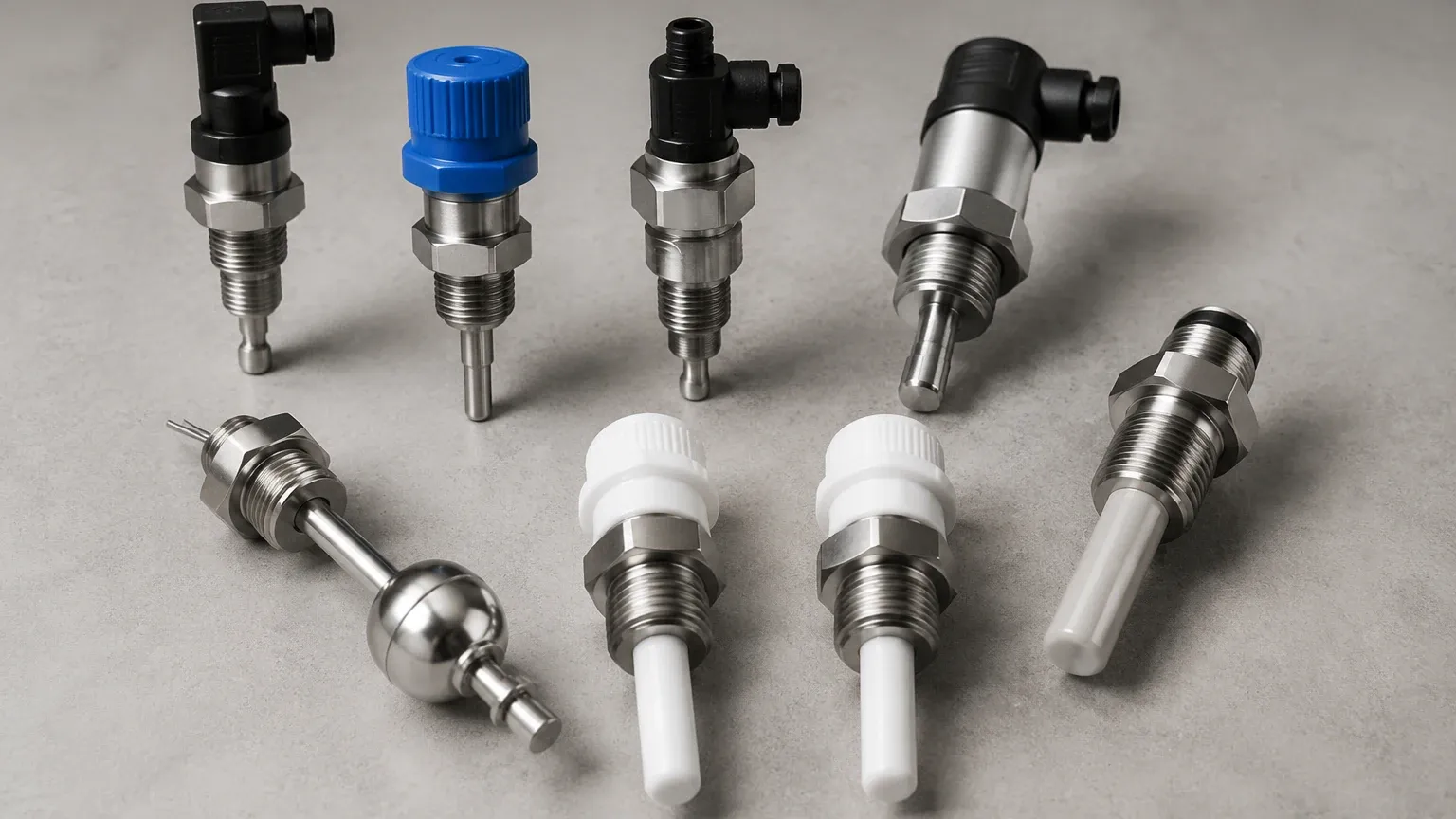
1. Float-Operated Switches: A float is designed to be lighter than the process liquid. As the liquid level rises, the float moves upward. This movement is mechanically or magnetically coupled to a switch mechanism. Because the float must actually move, these systems are highly reliable for clean liquids but can be sensitive to coating or high-viscosity media.
2. Displacer-Operated Switches: Unlike a float, a displacer is heavier than the liquid and is suspended by a spring. When the liquid reaches the displacer, the buoyant force reduces the effective weight of the displacer, causing the spring to retract slightly. This small movement triggers the switch. Displacers are often preferred in turbulent tanks or applications with low-density liquids because they do not "bob" as easily as floats.
Magnetic Coupling
To maintain the integrity of high-pressure vessels, Jerguson level switches frequently utilize magnetic coupling. The switching element is housed in a non-magnetic stainless steel tube, completely isolated from the process pressure. A magnet attached to the float or displacer moves outside this tube to actuate a dry contact or pneumatic switch. This "seal-less" design eliminates the risk of leaks through packing glands or bellows.
Key Evaluation Criteria for Jerguson Level Switches
When evaluating jerguson level switches for a specific application, engineers must look beyond basic pipe sizes. The following technical parameters are decisive for long-term reliability.
Specific Gravity (SG)
The density of the process liquid is the most critical factor. A float designed for water (SG 1.0) may not float in a light hydrocarbon (SG 0.6). Conversely, a displacer must be calibrated to the specific gravity of the liquid to ensure the spring tension is correctly adjusted for the buoyant force. For applications involving high-temperature water (e.g., boiler feed), the SG significantly decreases as temperature rises, which must be factored into the switch's calibration.
Pressure and Temperature Ratings
Industrial switches are often subjected to extreme conditions. Jerguson specializes in "armored" designs capable of withstanding pressures exceeding 200 bar (approx. 2900 PSI) and temperatures up to 450°C (842°F). It is vital to confirm that both the housing and the internal sensing elements (floats/springs) are rated for the maximum allowable working pressure (MAWP) of the vessel.
Material Compatibility
The wetted parts—the components in direct contact with the liquid—must be resistant to corrosion. While 316/316L Stainless Steel is the standard, aggressive chemicals may require Monel, Hastelloy, or specialized coatings. Furthermore, the switch housing (the "conduit box") should be selected based on the environment, such as NEMA 4X for outdoor corrosive areas or NEMA 7/9 for explosion-proof requirements.
Technical Selection Table
The following table provides a general comparison of common configurations for heavy-duty level switches used in industrial environments.
| Feature | Float-Type Switch | Displacer-Type Switch | Ultrasonic Gap Switch |
| :— | :— | :— | :— |
| Primary Principle | Buoyancy (Floating) | Buoyancy (Weight Change) | Sonic Attenuation |
| Max Pressure | Up to 150 bar (2175 PSI) | Up to 250 bar (3625 PSI) | Up to 100 bar (1450 PSI) |
| Max Temperature | 400°C (752°F) | 450°C (842°F) | 150°C (302°F) |
| Min Specific Gravity | 0.40 | 0.35 | N/A (Independent of SG) |
| Turbulence Resistance | Moderate | High | Excellent |
| Maintenance Level | Low (Clean fluids) | Moderate (Spring check) | Low (No moving parts) |
Installation Considerations and Best Practices
Proper installation of jerguson level switches is as important as the selection of the instrument itself. Incorrect mounting can lead to "chattering" (rapid cycling of the switch) or failure to trigger.
External Chambers (Bridles)
In many high-pressure applications, level switches are mounted in an external chamber or "cage" rather than directly on the vessel. This offers several advantages:
* Isolation: The switch can be isolated from the main vessel using valves for maintenance without shutting down the process.
* Stability: The chamber acts as a stilling well, reducing the impact of surface turbulence or foam inside the tank.
* Ease of Calibration: The level in the chamber can be manually manipulated (using drain and vent valves) to test the switch's trip point.
Orientation and Clearances
Float switches generally require vertical mounting to ensure the float rod moves freely. It is essential to ensure there are no internal obstructions, such as baffles or agitators, that could interfere with the float's path. For displacer switches, the suspension cable or rod must be perfectly plumb to prevent friction against the chamber walls.
Wiring and Safety
In hazardous areas, switches must be wired through intrinsically safe (IS) barriers or housed in explosion-proof enclosures. Always use a "drip loop" in the conduit to prevent moisture from entering the switch housing. For critical safety functions, such as High-High (HH) level alarms for overfill prevention, engineers should consider a redundant configuration or a switch with SIL (Safety Integrity Level) certification.
Limitations and Common Risks
While robust, mechanical level switches have inherent limitations that must be managed:
* Build-up and Scaling: In applications like wastewater or heavy crude oil, material can build up on the float or displacer. This increases the weight of the sensing element, potentially causing it to sink or stick in one position.
* Mechanical Wear: Over millions of cycles, springs in displacer switches can lose their tension, and pivots in mechanical linkages can wear down. Regular proof-testing is required to ensure functionality.
* Vibration: High-frequency vibration from nearby pumps or compressors can cause mechanical switches to trip prematurely. In such cases, electronic switches or those with adjustable time delays may be necessary.
* Interface Detection: Standard float switches are designed for a single liquid. If an oil-water interface needs to be detected, the float must be weighted specifically to sink in the top layer (oil) and float on the bottom layer (water).
Frequently Asked Questions (FAQ)
Q: Can Jerguson level switches be used for steam drum applications?
A: Yes. Jerguson is a leader in boiler water level instrumentation. Their switches are specifically designed to handle the high temperatures and pressures of saturated steam, often utilizing heavy-walled chambers and specialized magnetic couplings.
Q: How do I test a level switch without draining the tank?
A: If the switch is mounted in an external chamber with isolation valves, you can close the valves and use the chamber's drain/vent ports to lower or raise the liquid level locally, simulating a trip condition.
Q: What is the difference between a SPDT and DPDT switch contact?
A: A Single Pole Double Throw (SPDT) switch can control one circuit (e.g., an alarm). A Double Pole Double Throw (DPDT) switch can control two independent circuits simultaneously (e.g., an alarm and a pump shutdown), providing an extra layer of signal redundancy.
Q: Are there non-mechanical alternatives to Jerguson switches?
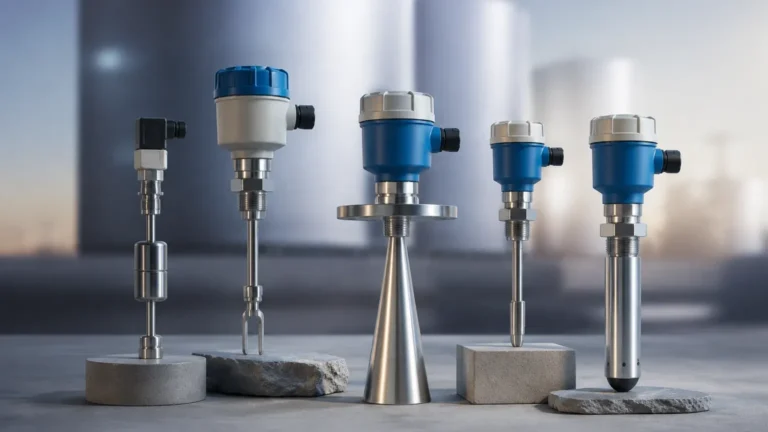
A: For applications where moving parts are a concern, technologies such as vibrating forks, ultrasonic gap switches, or radar level transmitters are used. However, for extreme high-pressure steam, mechanical buoyancy remains a preferred standard due to its simplicity and thermal resilience.
Conclusion
Jerguson level switches remain a cornerstone of industrial point level detection due to their rugged construction and reliance on proven physical principles. By carefully considering the specific gravity of the media, the operating pressure, and the physical installation requirements, engineers can ensure high levels of process safety and reliability. Whether used for simple pump control or critical emergency shutdown systems, understanding the nuances of buoyancy and magnetic coupling is key to successful instrumentation deployment.