Level Switch 2130
Level Switch 2130
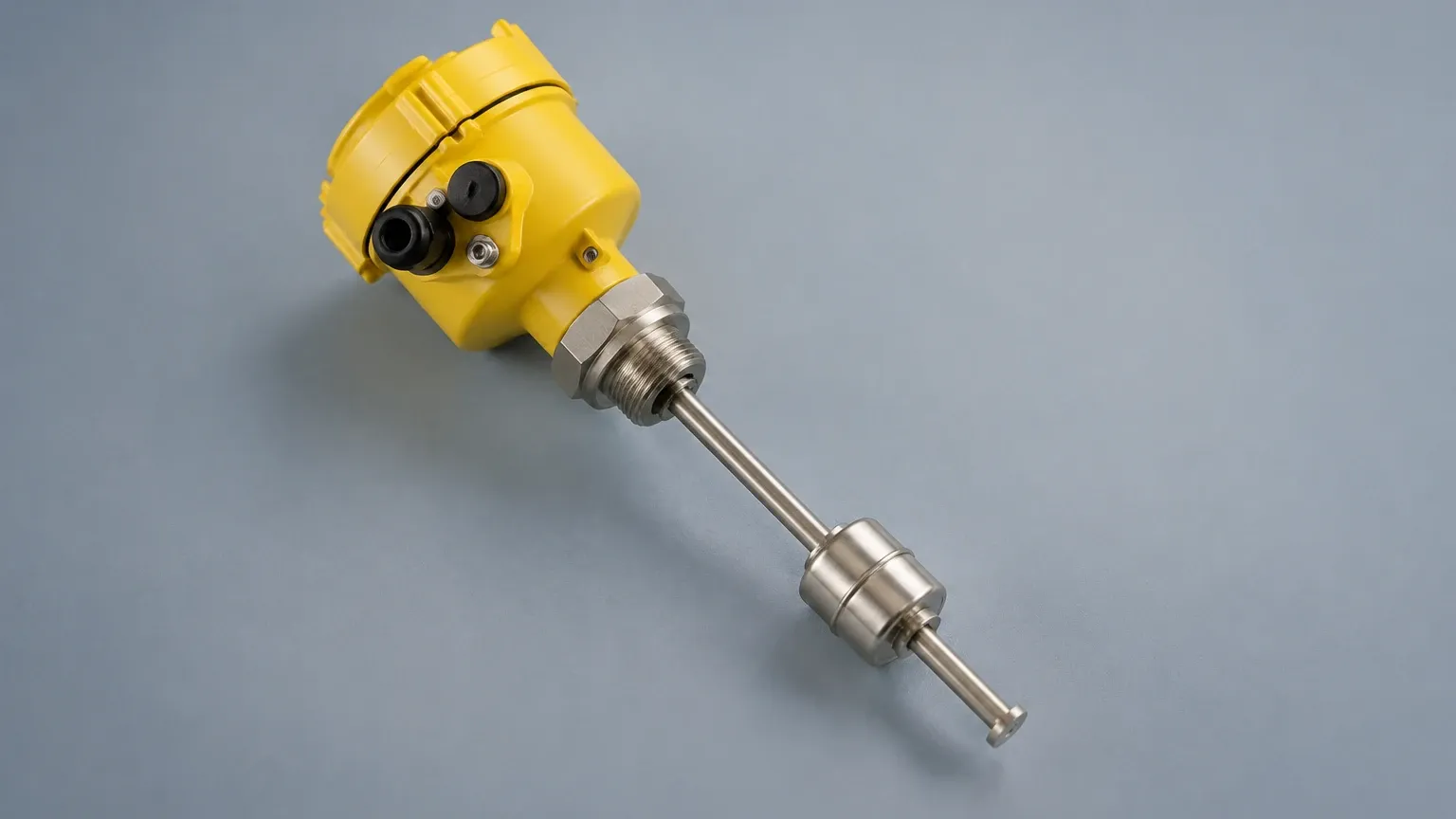
In industrial process control, the reliability of point level detection is a critical factor in ensuring plant safety, preventing environmental hazards, and optimizing production efficiency. The level switch 2130 represents a high-performance category of vibrating fork level sensors designed specifically for liquid applications. These devices are widely utilized for overfill protection, high- and low-level alarms, and pump control across industries ranging from chemical processing to water treatment.
As a professional manufacturer of industrial level measurement instruments, Welk provides advanced Level Switches that adhere to strict quality standards, offering accurate and cost-effective solutions for global industrial automation. This guide examines the technical foundations, selection criteria, and practical installation requirements for the 2130 series technology.
Understanding the Vibrating Fork Principle
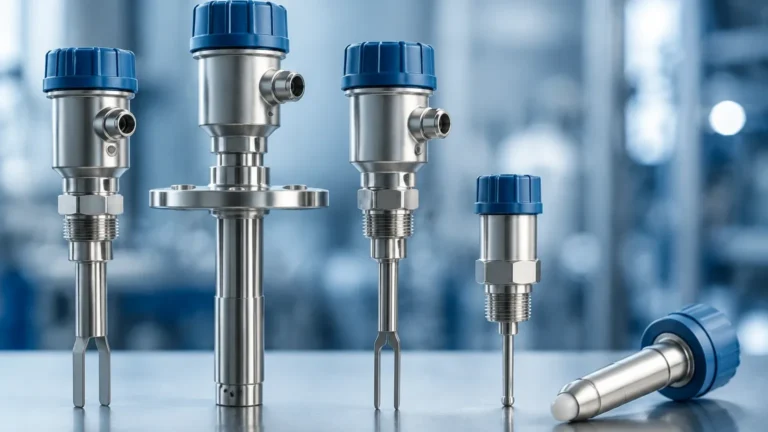
The level switch 2130 operates on the principle of a vibrating short-fork. The core of the device is a pair of stainless steel forks that are driven to vibrate at their natural resonant frequency by a piezo-electric crystal assembly located within the sensor housing.
The Physics of Frequency Shift
When the forks are in the air (the "dry" state), they vibrate at their maximum frequency, typically around 1200 Hz to 1400 Hz depending on the specific design. As the liquid level rises and contacts the forks, the frequency of vibration decreases due to the increased mass and damping effect of the liquid medium.
This change in frequency is continuously monitored by the internal electronics. Once the frequency drops below a pre-defined threshold, the electronics trigger a state change in the output—switching from "off" to "on" (or vice versa, depending on the configuration). This technology is often referred to as a "liquid level switch" or "tuning fork switch."
Advantages of the Vibrating Fork Design
Unlike float switches, which rely on mechanical movement and are prone to jamming or sticking, the level switch 2130 has no moving parts. This makes it virtually maintenance-free. Furthermore, the high-frequency vibration provides a self-cleaning effect, allowing the sensor to shed small amounts of scale or build-up that might otherwise cause false readings in static sensors.
Key Technical Specifications and Performance
When evaluating the level switch 2130 for a specific project, engineers must consider the mechanical and electrical limits of the device. These sensors are engineered to withstand harsh process conditions that would disable less robust technologies.
Material Construction
The wetted parts are typically constructed from 316L stainless steel (1.4404) or higher-grade alloys like Hastelloy for corrosive environments. This ensures compatibility with a wide range of industrial chemicals and cleaning agents (CIP/SIP processes).
Process Limits
* Temperature Range: Standard models typically operate from -40°C to 150°C (-40°F to 302°F). High-temperature variants can extend this range to 260°C (500°F).
* Pressure Range: Most 2130 units are rated for vacuum up to 100 bar (1450 psi), making them suitable for high-pressure storage tanks and reactors.
* Liquid Density: The technology is highly sensitive, often capable of detecting liquids with densities as low as 500 kg/m³ (0.5 S.G.).
Output Options
To integrate with various control systems, the level switch 2130 is available with multiple electronic output types:
1. Direct Load Switching: Two-wire AC or DC circuits.
2. PNP/NPN: Three-wire DC for PLC inputs.
3. Relay Output: DPDT relays for direct control of pumps or valves.
4. NAMUR: For intrinsically safe applications in hazardous areas.
Application Suitability for Level Switch 2130
The level switch 2130 is a versatile instrument, but its performance is optimized for specific liquid environments. Understanding where it excels—and where it faces challenges—is essential for practical engineering.
Ideal Use Cases
* Overfill Prevention: Acting as an independent high-level alarm to prevent tank overflows in oil and gas or chemical storage.
* Pump Protection: Installed in pipelines or suction tanks to detect the absence of liquid (dry-run protection), preventing damage to expensive centrifugal pumps.
* Hygienic Applications: With polished surfaces and tri-clamp fittings, these switches are standard in food, beverage, and pharmaceutical production.
* Condensate Detection: Reliable detection of water levels in steam systems or compressed air headers.
Limitations and Risks
While robust, the level switch 2130 is not a universal solution. It should not be used in the following scenarios:
* High Viscosity/Heavy Coating: If the liquid is extremely viscous (e.g., thick molasses or heavy crude) and creates a permanent bridge between the forks, the sensor will remain in the "wet" state even after the level drops.
* Granular Solids: While some vibrating forks are designed for solids, the 2130 liquid-optimized fork is prone to damage or false signals if used with heavy powders or gravel.
* High Aeration: If the liquid is heavily aerated (foamy), the density may drop below the sensor's detection threshold, leading to a failure to switch.
Selection Criteria and Engineering Considerations
Before procurement, project managers should confirm the following parameters to ensure the level switch 2130 meets the application requirements.
| Feature | Requirement / Parameter | Engineering Note |
| :— | :— | :— |
| Medium Density | Min. 500 kg/m³ | Ensure the liquid is dense enough to damp the vibration. |
| Viscosity | Max. 10,000 cP | Higher viscosity requires wider fork spacing or specialized coatings. |
| Mounting Type | Threaded, Flanged, or Hygienic | Match the tank nozzle or pipe fitting size (e.g., 1" NPT, DN50). |
| Insertion Length | 50 mm to 3000 mm | Extended lengths are available for top-down mounting. |
| Hazardous Area | ATEX, IECEx, FM | Confirm if the environment requires explosion-proof or I.S. ratings. |
Diagnostic Features
Modern iterations of the level switch 2130 include "Heartbeat" or status LEDs. A green flashing light typically indicates the sensor is healthy and vibrating, while a solid red or amber light indicates a fault (such as internal electronic failure or excessive corrosion of the forks). This diagnostic capability is vital for Safety Instrumented Systems (SIS).
Installation and Mounting Best Practices
Proper installation is as important as selecting the right sensor. Incorrect placement can lead to false alarms or physical damage to the instrument.
Orientation
* Side Mounting: The forks should be oriented so that liquid can drain easily. For horizontal mounting, the forks should be oriented vertically (on their edge) rather than flat. This prevents liquid from pooling between the forks.
* Top Mounting: When installed from the top of a tank, an extension tube is used. Ensure the switch point is calculated based on the desired alarm level, factoring in the length of the forks.
Avoiding Turbulence and Flow
If the level switch 2130 is installed near a fill pipe or an agitator, the physical force of the moving liquid can cause the forks to vibrate incorrectly or even snap. In these cases:
1. Install a baffle plate to protect the forks.
2. Relocate the sensor to a "stillwell" or a calmer area of the tank.
3. Ensure the forks are not directly in the path of a high-velocity spray ball during cleaning cycles.
Electrical Wiring
Always use shielded cables in environments with high electromagnetic interference (EMI). Ensure the cable gland is tightened to maintain the IP66/67/68 ingress protection rating, preventing moisture from entering the housing and causing short circuits.
Maintenance and Troubleshooting
Because the level switch 2130 has no moving parts, maintenance is minimal. However, periodic inspections are recommended for critical safety loops.
1. Visual Inspection: Check the forks for signs of pitting, corrosion, or heavy scale build-up. If the process medium is prone to scaling, periodic cleaning with a soft brush or compatible solvent may be necessary.
2. Proof Testing: For overfill protection systems, a manual proof test should be conducted annually. This involves raising the liquid level to the sensor or using a built-in test magnet (available on some models) to simulate a wet state.
3. Troubleshooting False Alarms: If the sensor indicates "wet" when the tank is empty, check for bridging between the forks. If it indicates "dry" when submerged, check the density settings or look for internal electronic damage caused by power surges.
Frequently Asked Questions (FAQ)
Q: Can the level switch 2130 be used for interface detection?
A: Yes, it can often detect the interface between two immiscible liquids (like oil and water) if there is a significant difference in their densities, though specific calibration may be required.
Q: Is the 2130 suitable for boiling liquids?
A: Yes, provided the density of the liquid remains above the minimum threshold. However, heavy bubbling (cavitation) directly on the forks may cause intermittent switching.
Q: How does the level switch 2130 handle coating or build-up?
A: The high-frequency vibration naturally sheds light build-up. However, if the coating is thick and conductive (like wet clay), it may eventually cause a false trigger. In such cases, a sensor with a "coating rejection" algorithm or a different technology like a radar level meter might be more appropriate.
For engineers seeking reliable point level control, the level switch 2130 offers a balance of durability and precision. By understanding the underlying vibration principle and adhering to proper installation guidelines, facilities can ensure long-term operational safety and process consistency. For more technical details and product variations, explore our comprehensive range of Level Switches.