Level Switches for Water Tanks
Level Switches for Water Tanks
In industrial and municipal water management, the reliable detection of liquid thresholds is essential for process safety and operational efficiency. Level switches for water tanks serve as the primary line of defense against tank overflows and pump cavitation caused by dry-running. Unlike continuous level transmitters that provide a constant data stream of the liquid's position, level switches are point-level sensors designed to trigger an electrical signal when the water reaches a specific height.
Selecting the appropriate technology requires a deep understanding of the physical properties of the water being measured—whether it is potable, wastewater, or high-purity deionized water—as well as the mechanical constraints of the tank itself. This guide examines the core measurement principles, selection criteria, and installation best practices for industrial level switches.
Measurement Principles of Level Switches
Before selecting a device, engineers must evaluate how different sensing technologies interact with the medium. Each principle offers distinct advantages depending on the water's conductivity, viscosity, and the presence of contaminants.
Float Level Switches (Mechanical/Magnetic)
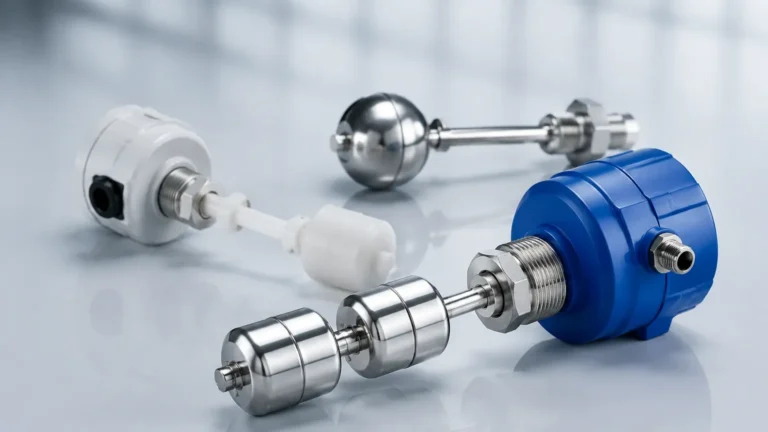
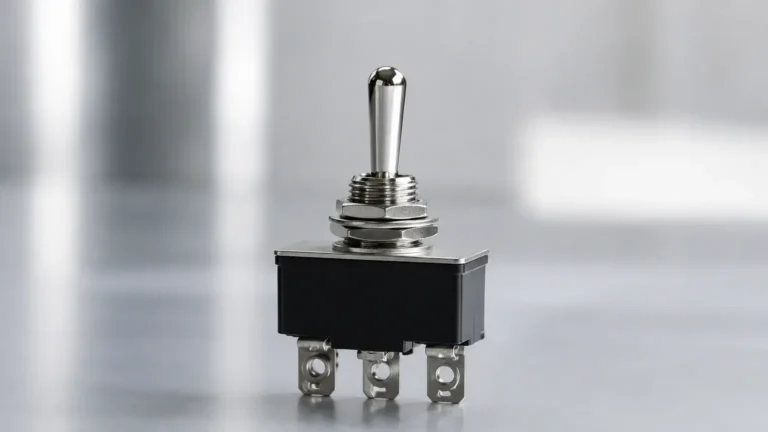
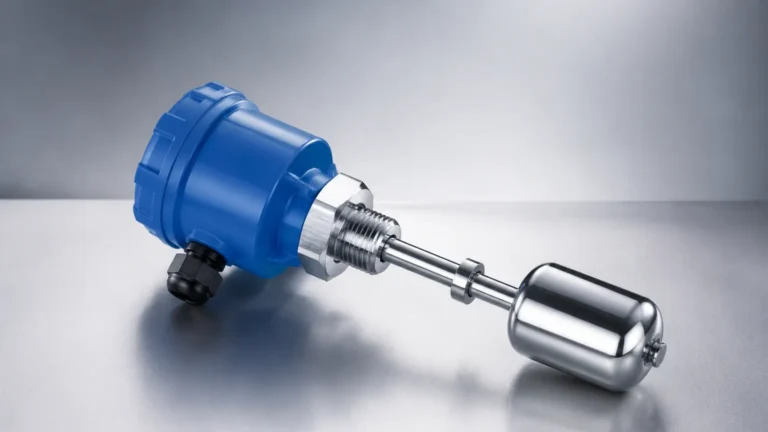
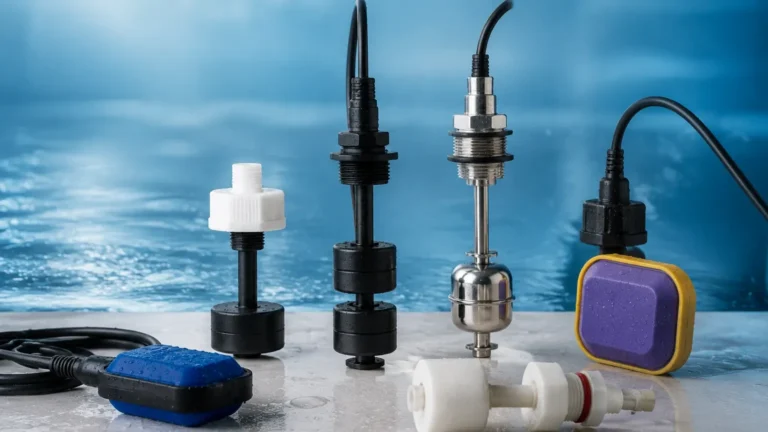
Float switches operate on the principle of buoyancy. A buoyant body, containing a permanent magnet, rises and falls with the water level. When the float reaches a predetermined point, the magnetic field actuates a reed switch or a microswitch located within the stem or housing. These are among the most common Level Switches due to their simplicity and low cost. They are ideal for clean water applications where mechanical movement is not hindered by debris.
Conductive Level Switches
Conductive probes utilize the electrical conductivity of the water to complete a circuit. A low-voltage AC current is passed through an electrode. When the water level rises and touches the probe, the liquid acts as a conductor between the electrode and the tank wall (if metal) or a reference ground probe. This technology is highly reliable for multi-point detection in conductive liquids but is unsuitable for non-conductive fluids like distilled water or oil-contaminated water.
Vibrating Point Level Switches (Tuning Fork)
These switches employ a tuning fork-shaped sensing element that is vibrated at its resonant frequency by a piezoelectric crystal. When the fork is submerged in water, the frequency of vibration shifts or is dampened. The internal electronics detect this change and switch the output state. Vibrating switches are exceptionally robust, as they are unaffected by turbulence, bubbles, or foam, making them a preferred choice for high-level alarms in turbulent process tanks.
Capacitance Level Switches
Capacitance sensors treat the probe and the tank wall as two plates of a capacitor, with the water acting as the dielectric material. As the water level rises, the total capacitance increases. Once a specific threshold is crossed, the switch triggers. These are effective for detecting water levels in non-metallic tanks or where non-contact through a plastic wall is required, though they may require calibration to account for specific dielectric constants.
Ultrasonic Point Level Switches
Ultrasonic switches use high-frequency sound waves. A transducer emits a pulse that travels through a gap. When water fills the gap, the acoustic impedance changes, signaling the presence of the liquid. These are useful for aggressive chemicals or ultrapure water where contact with moving parts must be avoided.
Selecting Level Switches for Water Tanks
Choosing the right level switches for water tanks involves more than just selecting a technology; it requires matching the instrument to the specific environmental and chemical conditions of the application.
1. Water Quality and Composition
* Potable Water: Requires food-grade materials such as 316 Stainless Steel or specific plastics (PP, PVDF) that do not leach contaminants.
* Wastewater/Sewage: Mechanical floats are prone to fouling. Vibrating forks or non-contact sensors are better suited to handle suspended solids and grease.
* Deionized/Ultrapure Water: Conductive switches will not work due to the lack of ions. Capacitance or ultrasonic technologies are required.
2. Tank Material and Geometry
For metallic tanks, the tank wall can often serve as a ground reference for conductive or capacitance switches. In plastic or fiberglass tanks, a dedicated ground probe or a dual-probe configuration is necessary. Additionally, the presence of internal structures like agitators or baffles may limit the space available for large float assemblies.
3. Process Conditions
* Pressure: Standard atmospheric tanks can use basic float switches. Pressurized vessels require sensors rated for the specific bar (or PSI) levels of the system.
* Temperature: While most water applications are ambient, hot water storage (e.g., 80°C to 95°C) requires high-temperature-rated gaskets and electronics housings.
Practical Selection Table
| Technology | Best For | Limitations | Maintenance Level |
| :— | :— | :— | :— |
| Float Switch | Clean water, simple sumps | Prone to sticking if debris is present | Medium |
| Conductive Probe | Multi-level control, cost-effective | Requires conductive liquid (>10 μS/cm) | Low |
| Vibrating Fork | Turbulent water, foam, high safety | Higher initial cost | Very Low |
| Capacitance | Non-metallic tanks, coating liquids | Requires calibration for different media | Medium |
| Ultrasonic | High-purity water, no moving parts | Can be affected by heavy vapor/steam | Low |
Installation Considerations
Proper installation is critical to ensure the longevity and accuracy of the level switch. Failure to account for the physical dynamics of the tank can lead to false triggers or premature sensor failure.
Mounting Orientation
Level switches can be mounted horizontally (through the side of the tank) or vertically (from the top).
* Vertical Mounting: Ideal for deep tanks where multiple switching points are needed on a single stem. It is also easier to maintain without draining the tank.
* Horizontal Mounting: Often used for high-level or low-level point detection. Ensure the switch is positioned away from the water inlet to avoid false triggers from splashing.
Turbulence and Agitation
In tanks with high inflow rates or agitators, the water surface may be turbulent. For float switches, a stilling well (a perforated pipe, typically 50mm to 100mm in diameter) should be installed around the sensor to dampen surface movement. Vibrating forks are naturally more resistant to turbulence but should still be positioned to avoid direct impact from high-velocity water streams.
Wiring and Electrical Safety
Industrial water tanks are often located in damp environments. Ensure all cable entries are sealed with appropriate glands (IP65 or IP68 rating). For outdoor tanks, UV-resistant cabling and sunshades for the electronics housing are recommended to prevent degradation and overheating.

Limitations and Common Risks
While level switches are generally reliable, certain conditions can compromise their performance:
1. Scaling and Buildup: In hard water applications, calcium carbonate (scale) can accumulate on float stems or conductive probes. This can cause floats to jam or probes to lose electrical contact. Regular inspection intervals are necessary in these environments.
2. Electrolysis: When using DC current for conductive probes, electrolysis can occur, leading to probe erosion. Always use AC-based conductive controllers to mitigate this risk.
3. Specific Gravity: Float switches are designed for specific liquid densities. If the water contains high concentrations of dissolved solids or other chemicals that significantly alter its specific gravity, the float may not sit at the intended level.
4. Mechanical Fatigue: In high-cycle applications (e.g., a pump that cycles every few minutes), mechanical microswitches within a float may reach their end-of-life faster than solid-state electronic switches.
Maintenance and Troubleshooting
A proactive maintenance schedule ensures that level switches for water tanks function when needed most.
* Visual Inspection: Check for signs of corrosion on the housing and buildup on the sensing element.
* Functional Test: Manually lift the float or bridge the conductive probes to ensure the control panel receives the signal and the pumps/valves respond correctly.
* Cleaning: Use a soft brush or mild descaling agent to remove mineral deposits. Avoid abrasive tools on sensitive membranes or polished stainless steel surfaces.
Frequently Asked Questions (FAQs)
Q: Can I use a single level switch to start and stop a pump?
A: While a single switch can signal a start or stop, it is standard engineering practice to use two switches (High and Low) to create a "deadband" or hysteresis. This prevents the pump from "chattering" (turning on and off rapidly) when the water level is right at the switching point.
Q: Are float switches safe for drinking water?
A: Yes, provided they are constructed from certified non-toxic materials like 316 Stainless Steel or food-grade Polypropylene. Always check for local regulatory certifications (such as NSF or WRAS).
Q: How do I handle foam on the water surface?
A: Foam can trick ultrasonic and some capacitance switches. Vibrating tuning forks are the most reliable option for ignoring foam and detecting the actual liquid level.
Q: What is the maximum length for a vertical level switch?
A: For rigid stems, lengths are typically limited to 2 to 3 meters (approx. 6.5 to 10 feet) to prevent bending. For deeper tanks, cable-suspended float switches or hydrostatic pressure sensors are used instead.
By understanding the specific requirements of the water tank environment and the strengths of each sensing technology, engineers can implement a level control solution that minimizes downtime and protects critical infrastructure.