Cotmètre
Cotmètre
In the field of industrial process control, a cotmètre—the French term for a level meter or level gauge—serves as a critical component for monitoring the quantity of liquids or solids within tanks, silos, and open channels. Precise level measurement is essential not only for inventory management but also for ensuring operational safety and process efficiency. Welk, a professional manufacturer of industrial level measurement instruments, provides a diverse range of technologies designed to meet the rigorous demands of water treatment, chemical processing, and oil and gas industries.
Selecting the appropriate cotmètre requires a deep understanding of the underlying physical principles of measurement, as well as the specific environmental conditions of the application. This guide provides a technical overview of common level measurement technologies, selection criteria, and installation best practices for engineering professionals.
Measurement Principles of Modern Level Instruments
Before selecting a device, it is necessary to understand how different sensors interact with the medium. Industrial level measurement is generally categorized into non-contact and contact methods.
Radar Level Measurement (Time of Flight)
Radar cotmètres utilize high-frequency electromagnetic waves, typically in the 26GHz or 80GHz range. The instrument emits a pulse that travels to the surface of the medium, reflects, and returns to the sensor. The distance is calculated based on the time of flight (ToF).
* Free-Space Radar: Emits waves through the air. It is ideal for corrosive media as the sensor does not touch the liquid.
* Guided Wave Radar (GWR): Uses a probe or cable to guide the signal. This is highly effective in low-dielectric liquids or applications with heavy foam and turbulence.
Ultrasonic Level Measurement
Ultrasonic sensors function similarly to radar but use sound waves instead of electromagnetic pulses. The transducer emits an ultrasonic pulse that bounces off the surface of the medium. Because the speed of sound is affected by air temperature, these devices usually include an integrated temperature sensor to compensate for fluctuations and maintain accuracy.
Hydrostatic Level Measurement
This method relies on the principle that the pressure at a specific depth in a static liquid is proportional to the height of the liquid column above it. The formula used is $P = \rho \cdot g \cdot h$, where $P$ is pressure, $\rho$ is the density of the liquid, $g$ is gravity, and $h$ is the height. A hydrostatic transmitter is submerged or mounted at the bottom of the tank to measure this pressure and convert it into a level reading.
Magnetic Level Gauges
Magnetic cotmètres are contact-based instruments consisting of a bypass chamber connected to the vessel. A float containing a permanent magnet moves up and down with the liquid level. Outside the chamber, a visual indicator (flaps or rollers) or a transmitter tracks the magnet's position. This provides a highly reliable, power-free visual indication suitable for high-pressure and high-temperature environments.
Practical Selection Criteria for Industrial Applications
Choosing the right cotmètre involves evaluating the physical properties of the medium and the mechanical constraints of the vessel. For detailed technical specifications and model comparisons, engineers may refer to the Welk Main Page for comprehensive product data.
1. Media Properties
* Dielectric Constant ($ε_r$): For radar measurement, the reflectivity of the signal depends on the dielectric constant. Low $ε_r$ fluids (like oils) reflect less energy than high $ε_r$ fluids (like water).
* Density: Hydrostatic and magnetic gauges are density-dependent. If the density changes due to temperature fluctuations, the measurement must be compensated.
* Corrosivity: Corrosive acids require non-contact sensors (Radar/Ultrasonic) or instruments made from specialized materials like PTFE or Hastelloy.
2. Process Conditions
* Temperature and Pressure: Ultrasonic sensors are limited to moderate temperatures (usually below 70°C) and atmospheric pressure. In contrast, radar and magnetic gauges can handle extremes exceeding 250°C and 4 MPa.
* Vapor and Dust: Heavy steam or dust can attenuate ultrasonic signals. Radar is generally immune to these conditions.
3. Vessel Geometry
Internal obstructions such as agitators, heating coils, or ladders can create false echoes for radar and ultrasonic sensors. In such cases, guided wave radar or bypass magnetic gauges are preferred.
Technology Comparison Table
The following table provides a general comparison of the most common cotmètre technologies used in industrial automation.
| Technology | Medium Type | Typical Accuracy | Max Temperature | Max Pressure | Best Use Case |
| :— | :— | :— | :— | :— | :— |
| Radar (80GHz) | Liquid / Solid | ±2 mm | 250°C | 4.0 MPa | Precise chemical storage |
| Ultrasonic | Liquid / Slurry | ±0.25% | 70°C | Atmospheric | Water treatment basins |
| Hydrostatic | Liquid | ±0.5% | 80°C | N/A | Deep wells / Vented tanks |
| Magnetic Gauge | Liquid | ±5 mm | 450°C | 16.0 MPa | High-pressure boilers |
| Guided Wave Radar| Liquid / Powder | ±3 mm | 200°C | 4.0 MPa | Small tanks with foam |
Installation Considerations and Best Practices
Correct installation is as vital as selecting the right technology. Failure to follow mechanical guidelines often leads to signal loss or measurement errors.
Positioning and Orientation
* Avoid the Center: For radar and ultrasonic sensors, do not install the device in the exact center of a domed tank, as this can concentrate multiple reflections and cause signal interference.
* Wall Clearance: Maintain a minimum distance from the tank wall (typically 200 mm to 500 mm depending on the beam angle) to prevent the signal from reflecting off the wall surface.
* Inlet Flow: Never install a cotmètre directly above the filling inlet, as the falling material will interfere with the signal or damage the probe.
Dead Zones (Blocking Distance)
Every non-contact sensor has a "dead zone" or "blocking distance" directly below the transducer where measurement is impossible. Ensure that the maximum expected liquid level does not enter this zone. If the tank is frequently filled to the top, a nozzle extension or a different sensor mounting may be required.
Environmental Protection
For outdoor installations, sunshields are recommended to prevent overheating of the electronics. In humid environments, ensure that cable glands are pointed downwards and loops are formed in the wiring to prevent moisture from entering the housing via the conduit.

Limitations and Common Risks
While modern level meters are highly advanced, they are not universal solutions. Engineers must be aware of the following limitations:
1. Foam Interference: Thick, dense foam can absorb ultrasonic and radar signals. While Guided Wave Radar (GWR) handles foam better, it is not foolproof. In extreme foaming conditions, a mechanical magnetic level gauge is often the most reliable choice.
2. Vacuum Effects: In a vacuum, sound cannot travel. Therefore, ultrasonic cotmètres cannot be used in vacuum tanks. Radar, which uses electromagnetic waves, functions perfectly in a vacuum.
3. Build-up: Sticky media can accumulate on radar antennas or ultrasonic transducers. While some sensors feature "tank mapping" to ignore build-up, significant accumulation will eventually require manual cleaning or the use of a self-cleaning purging system.
Frequently Asked Questions (FAQ)
Q: Can a radar cotmètre measure the level of solids like grain or cement?
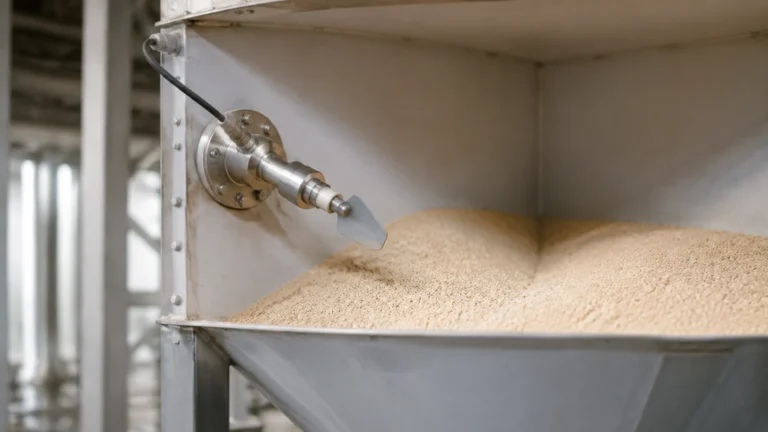
A: Yes, but it requires a high-frequency radar (typically 80GHz) with a narrow beam angle to handle the uneven surface and dust associated with solids.
Q: What is the advantage of 80GHz radar over 26GHz radar?
A: 80GHz radar has a much narrower beam angle, which allows it to avoid internal obstructions more easily and provides better resolution for measuring through narrow nozzles.
Q: Does the density of the liquid affect ultrasonic measurement?
A: No, ultrasonic measurement is based on the distance to the surface, so it is independent of the liquid's density. However, it is affected by the gas composition above the liquid.
Q: How often should a hydrostatic level transmitter be calibrated?
A: In standard water applications, annual calibration is usually sufficient. However, in applications with sediment or varying liquid densities, more frequent checks are recommended to ensure the pressure-to-level conversion remains accurate.
Conclusion
The selection of a cotmètre is a technical decision that impacts the safety and efficiency of an entire industrial process. By understanding the measurement principles of radar, ultrasonic, hydrostatic, and magnetic technologies, and by adhering to strict installation guidelines, operators can ensure long-term reliability. For customized OEM/ODM services or specific application support, visiting the Welk Main Page provides access to professional-grade instrumentation designed for global industrial standards.